

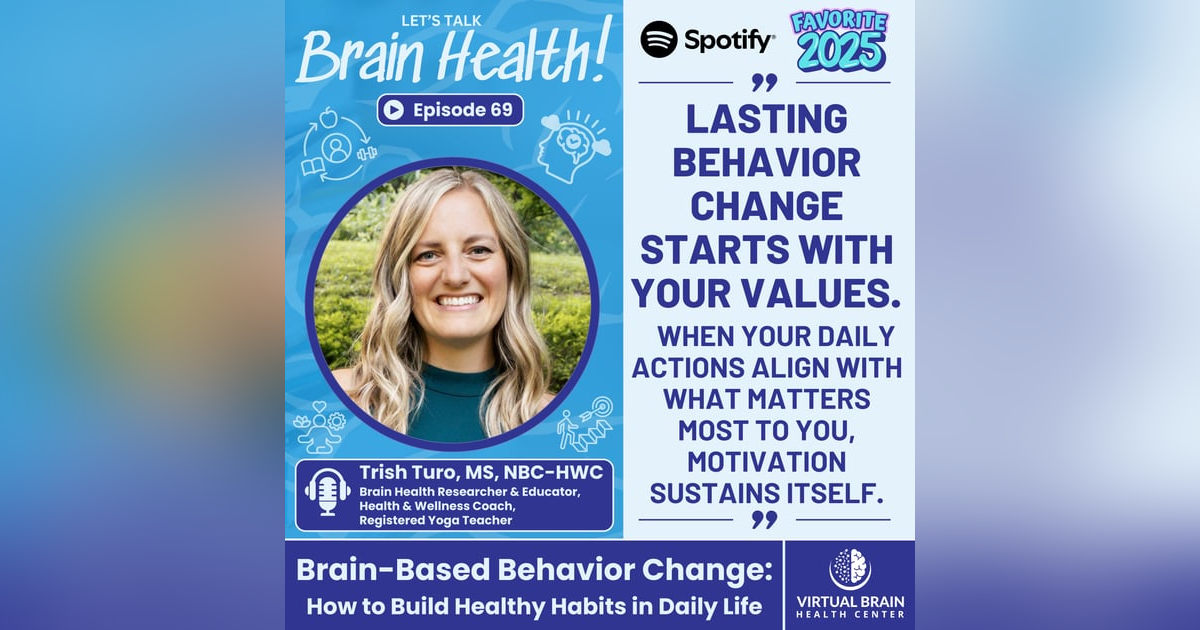
Brain-Based Behavior Chance: How to Build Healthy Habits in Daily Life with Trish Turn, MS, NBC-HWC


Episode Summary
Why is it so difficult to change habits even when you deeply care about the goal?
In this episode of the Let’s Talk Brain Health Podcast, Dr. Krystal Culler, DBH, MA, sits down with returning guest Trish Turo, NBC-HWC, health educator/researcher & brain health coach, to explore habits and behavior change through a brain-based lens.
Together, they unpack how habits form, why resistance shows up, and what is happening inside the brain when we try to change routines. This conversation focuses on real-life behavior change, not ideal conditions. You will learn how brain systems such as the amygdala, hippocampus, and prefrontal cortex influence motivation, fear, and follow-through.
This episode also explores how shame, setbacks, and past experiences shape the stories we tell ourselves about our ability to change. Instead of relying on willpower alone, Trish shares practical strategies that help you work with the brain rather than against it.
If you have ever said, “I know what to do, but I can’t seem to do it,” this conversation will help you understand why and what to do next.
What You’ll Learn in This Episode
• The difference between a behavior and a habit
• Why motivation often shows up after action rather than before it
• How the brain’s habit loop works: cue, routine, reward
• Why the amygdala can make behavior change feel threatening
• How past experiences and memories influence your willingness to try again
• The role of shame and self-talk in habit formation
• Why social support improves long-term behavior change
• Practical ways to make habit change easier for your brain
Practical Brain Health Tips from This Episode
Start small
Focus on one change at a time instead of trying to overhaul everything at once.
Use habit stacking
Pair a new habit with something you already do daily.
Anchor your habits to your values
Connect behavior change to something meaningful, such as family, health, or purpose.
Create visual reminders
Photos or objects connected to your values can reinforce daily choices.
Practice self-compassion
Your brain is designed to protect you from change. Progress requires patience.
Try something more than once
Your brain needs repetition to build new neural pathways.
Spend time in nature
Even small moments outside can support brain health and regulation.
About the Guest
Trish Turo, NBHWC, is a National Board Certified Health and Wellness Coach, brain health educator, researcher, and registered yoga teacher. She holds a master’s degree in health psychology and has spent more than a decade helping individuals and organizations support behavior change and healthy lifestyle habits.
Trish has presented at national conferences, served on national committees, and worked across digital healthcare organizations. She is also the author of "A Kid’s Book About Healthy Habits" and focuses on making brain health education accessible to people of all ages.
Connect with Trish Turo
- LinkedIn: Trish Turo, MS, NBC-HWC
- Instagram: @Coach_Trish
- LinkTr.ee: Coach_Trish
Previous Podcast Episode Mentioned In This Conversation
Key Takeaway
Habits shape daily life more than motivation ever will. When you understand how your brain responds to change, you reduce shame and increase your ability to follow through. Sustainable behavior change starts with small steps, patience, and learning to work with your brain’s natural tendencies.
Listener Question or Topic Suggestion?
Have a brain health topic you would like covered on the podcast?
Email: podcast@virtualbrainhealthcenter.com
Support the Podcast
If you found this episode helpful:
• Share it with someone who could benefit from it
• Leave a review to help others discover the show
Your brain health matters. Thank you for investing in it.


