

 Apple Podcasts

 Spotify

 Amazon Music
 RSS Feed
Exploring Brain Health Through Reading and Book Club Engagement with LeAnne Stuver and Heather Elwell
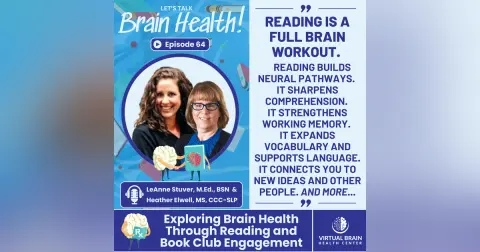
In this episode, we delve into the incredible benefits of reading for brain health with guests Leanne Stuver, a nurse educator and Director of Lifelong Learning, and Heather Elwell, CEO of Brain Health Mentors.
Learn how reading stimulates multiple brain areas, enhances social connections, and supports lifelong learning.
Discover the advantages of different reading formats, genres, and even how book clubs can enrich your cognitive and social wellbeing.
Join us as we discuss the science behind reading, offer practical tips, and share personal favorite book recommendations.
This episode is filled with insights and strategies to help you integrate reading into your brain health routine.
Tune in for a comprehensive discussion on how to make reading a key component of a happier, healthier life.
00:41 The Brain-Boosting Power of Reading
01:09 Meet Our Guests: Leanne Stuver and Heather Elwell
03:14 How Reading Impacts the Brain
07:30 The Benefits of Book Clubs
10:00 The Neuro Nook Book Club
22:04 Books vs. Audiobooks: What Science Says
26:05 Genres and Their Unique Brain Benefits
34:09 Rapid Fire Book Recommendations
41:03 Final Thoughts and Tips for Better Brain Health
Resources
- Learn more about the Neuro Nook (Book Club)
- Explore the Neuro Nook (Book Club) Reading List
- View Our Neuro Nook Rx Infographic
0:02 Welcome to the Let's Talk Brain Health podcast, a public health educational initiative of the virtual Brain Health Center. I'm your host, Doctor Crystal Color, and I'm so glad you're here. On this podcast, I sit down with incredible guests to explore all things brain health and Wellness. Together, we'll talk about how to care for your total brain health, mind, body, and spirit while sharing the latest brain Health Science practical tips and strategies you can use every day. By prioritizing your brain health, you're taking an important step towards living a happier, healthier life. So let's dive in and welcome today's guest. Today we focus on the brain boosting power of reading.
0:45 Reading is a workout for your visual system, language networks, memory circuits, and attention skills. It activates multiple lobes of your brain at the same time. It supports lifelong learning. It strengthens social connections when you share ideas with others. Today we will talk about how reading engages the brain and how book clubs support deeper thinking and social connections. Let's get started with our guests, which are two of my favorite book lovers and my colleagues and friends of the Virtual Brain Health Center. My first guest is Leanne Stuber, a nurse educator and the director of lifelong learning at the Virtual Brain Health Center. She's a registered nurse with a decade of hospital experience and home care experience.
1:30 She's also an experienced health educator dedicated to revolutionizing the way we approach health education. With over 25 years of expertise in the planning and implementation of adult education curricula, she has enlightened countless individuals through her diverse range of educational programs. Passionate about empowering individuals and communities, she strives to teach practical methods for supporting brain health and overall Wellness education our virtual brain Health Center. Leanne, welcome back to the podcast. Is there anything else about your background you'd like to share with our guests today? Thanks Crystal. Just that I have always been an avid reader, so I'm really looking forward to our conversation today.
2:16 I'm so glad you're back and thank you for always welcoming invitations to join me and talking about brain health education. Our 2nd guest today is my colleague and friend and Co host of the Neuronook Book Club, Heather Elwell and she is the founder and CEO of Brain Health Mentors where she supports people with proven lifestyle strategies to reduce the changes of getting dementia. She draws on her experience as a speech language pathologist for over 25 years and as a health and Wellness coach, she's passionate about teaching strategies to improve brain health. Heather's had the privilege to be a speaker on brain health to organizations such as the RP, Raymond James, Tampa General Hospital, and the largest retirement community in the US, The Villages.
3:07 So, Heather, welcome to the podcast officially. Leanne, we're going to start the conversation with you today. I think one of the best ways to do this is to talk about how reading impacts the brain. When you think about when kids learn to read, if that late 456, I guess it keeps getting earlier. But our brain is first set up for speech, so we actually have to learn to read. Speech comes much more naturally to our brain. It's a full brain workout to learn to read, and our eyes are so important to that because you have to be able to recognize the page, recognize the letters, form words, form sentences, use grammar correctly. There are so many things that we need to do with our eyes connected to our brain to get reading to work for us, if that makes sense.
4:10 It does and I believe our brains process words quickly. It where it is in our brain is very confusing for a lot of folks because our eyes are in the front of our head and we process words towards the back of our right. The occipital lobe is at the back base of our brain and that's where all of our visual things are processed. So that is the most important part of the brain for beginning to read because that's where the visual processes occur. However, reading is a full brain workout. Different areas of the brain do different things to put all the pieces together. For example, the temporal lobes which are on the sides of your brain near your ears, those are actually it's called the letterbox of the brain.
5:02 That's where the word construction comes together. Our parietal lobe, which is up on the top of the brain where you would wear a headband, we call that kind of the coordinator of everything. You can think of it like a Symphony. All the different instruments have to play together correctly, just like all these different areas of the brain have to work together in order for you to be able to read, recognize the words, remember the story, visualize what's going on. So that parietal lobe part of the brain is the conductor that keeps all the other parts of the brain connected so that when you read a story, you understand it.
5:48 You can read the words on the page, you can remember what you read so that you can keep track of the story the whole way through, and then you can talk about it with others afterwards. Reading is a full brain workout. Sounds like this can be why it's a complex task for all of us to get involved into reading and also why from a common experience at times of we've read a page and then we're like what just happened on the page 4 at times. Or we may have had that experience where we need to reread a page or reread a chapter if we have somehow lost our way and a story is that we've been in a busy place, or if we were trying to multitask, or if we were reading really late at night and we're dozing off into sleep. There's a lot of different ways we can lose track of a story when reading, and lots of common missteps can happen along the way because our brains can get really challenged throughout a story as well.
6:51 Yeah, and attention to it is really the big key to that. And if you're distracted by noises or visual things, I love to read in the quiet. That's my best place to read. And when I don't, if I'm reading somewhere noisy, I often have to go back and double check things that didn't stick with me the first time. I'm probably going to go out on a limb here by saying this, but for most of us as adults tuning in, we don't have the worksheets that we used to have when we were younger that guided us through plot of the story and main characters and having to tell someone else about what we were reading. And so now we're going to pivot to talk with Heather. How is reading for a book club different from leisure reading? A book club is an experience you get to share with others and that's what makes it so special.
7:44 It's a great way to meet new people, create new friendships and when we're learning new information, creating new relationships and being part of a community, those are all vital factors to living a brain healthy lifestyle. A lot of times people might say I don't know of anyone doing a book club in my area. I just wanted to say if you've moved to an area or are interested in a book club, you you can always look at your local library or an independent bookstore because often they hold different book clubs and that's a wonderful way to meet new people. And one of the trends I've been seeing if you're looking to just tap into that idea of a new community or social connection is they're called silent book clubs.
8:29 Everyone shows up with whatever book you're reading in a community space. So sometimes it is these independent books stores or sometimes just a larger community space and everyone brings the book they're reading and it is silent. Everyone just spends that one hour dedicated to reading and you're connected within community. And there's that socialization piece that may happen before or after. And so you don't have to commit to reading the same book, but you're committing to being in community with others. May want to check your local area for a silent book club. And what's the other benefits of book clubs that may pique people's interest? I'm one of those people.
9:13 I love my comfort zone. So I think when we're introduced to new topics and new ideas, our brains thrive. And I don't know about you, but one thing I have loved is when someone introduces me to a new author that I fall in love with. Isn't that so fun when you have all these new books that you can read? I think it's wonderful when we get feedback from other people and discover things we would have never discovered on our own. There's a lot to learn from other people or within community by simply asking, and I think it's always a great conversation starter of asking other people what are they reading about or great book that they've read lately or what's on their radar, especially when you're in a community of readers.
10:00 We do happen to run a monthly book club. This was an idea that we had in the works and we thought, why not? We read books, a lot of other people read books. That's a great workout for the brain. It's just one way that people seem to engage their brain. It's one way to have a community that brings people together. So we thought, let's put it out in the world and see what happens. And this was our brainchild that we launched in August of 2023. So now we can report 29 books later around brain health. We are still going. So, Heather, what would you like to tell people about our neuronal?
10:41 I love it. It's one of my favorite things and it's so fun when you have an idea and to watch it grow like we have. It started because we felt like there was all this research taking place, but a lot of people might not be reading these books. And also we wanted to have the opportunity to take this great research and share it with other people. It's been so wonderful because we've been able to connect with people all over the world and have authors on, and I think it's just incredible what our attendees have brought to the table, brought to the discussion. I always walk away with so many insights and ideas.
11:22 It's one of those experiences once a month that absolutely fills me up and encourages me to lead a more brain healthy lifestyle. The idea was somewhat simple. We had five guiding principles with the idea of The first one we wanted was yes, it's a brain health book club. So the first idea is it's a community dedicated to ideas focused on brain health books, but not just brain health in particular, but aspects of brain health. So we've read a wide variety of books from fun to awe, to having rituals to support your brain health, to sleep, to different aspects of that. And then I think the second thing we did was very intentional was it's not a requirement to read the book. You can show up because the topics caught your interest. You could show up because you'd like the book cover or you're just curious because a lot of the topics we do explore is people have rich lived experiences that they can still draw on and contribute to from the conversation. And so just that idea that there's no pressure, just encouragement was that second notion and the idea that we would have some engaging discussions. We had put out the idea that we would get expert insights and we had hoped that we would attract authors. And Doctor Mike Rucker from The Fun Habit was the first author to join us.
12:48 And we have been very grateful to have other authors follow his lead to join us live. We've had Maggie Moon, the author of The Mind Diet, Doctor Jen Frazier, author of The Bully Brain, come on. And then we've had other authors that couldn't join us live per SE, that had sent in videos, Doctor Mary Francis O'Connor of the Grieving Brain, Julia Huts of Connection Cure. So we've had different ways that authors have interfaced with us in our community that lets them connect with people who are interested in our book. And it also lets attendees hear directly from the authors what they are hoping are some key takeaways or just additional insights of why they wrote the book and what they hope people can take and apply it to their day-to-day lives.
13:38 And I think that's been an interesting little space that we have created. And we also have some great authors lined up in for 2026 where we get to explore tiny experiments in the gaslight brain coming up as well. So I think that's been some exciting things for us. What else are things that have excited you, Heather? We've covered a wide variety of topics. Have you had some favorites as well? I. Think just to summarize, what I love is when we explore these books, yes, they're showing us how we can live a brain healthy lifestyle, but really it's how we can add more happiness in our life, how we can reduce our stress, things that we can add or experience in our life that are going to bring a lot more joy as well.
14:23 I that's what I love so much about it is it's, yes, it's learning things that are going to make me healthier, but it's also things that are going to help me lead a fuller and richer life as well. And has there been a key learning or two that you want to pass on for folks that maybe haven't had a chance to attend a Neuro notebook club but are always welcome to join us? We meet on the 1st Thursday of every month at 12:00 Eastern Time for 45 minutes synchronously on Zoom. So always a standing invitation for people to join us. You can find the registration link below in our show notes or on our website. But let's give them some actionable takeaways as they're tuning in with us now, today. There's been so many great surprises and takeaways and just little tips that I feel like we can apply in our own lives. So one of my favorites that we read this past year was The Happier Hour.
15:17 And what I loved about this book is she. Looked at. Time and happiness. And what she found was that people that had less than two hours of free time a day felt time poor and that led to unhappiness. And then counter to that, people that had more than five hours of free time in a day to do with however they chose also led to unhappiness. So there's this sweet spot between two and five hours a day. So something to think about, if you are in your busy working years and life is busy, it's important that you are scheduling time for yourself, whether it's social connection, going for a workout, doing some self-care appointments, just reading for leisure.
16:04 It's important that you have time each day that you can experience these things. And then also, if you are, and I think of maybe college students home for the summer or some retirees, if you have lots of free time, like more than five hours a day, it's important that we start thinking what are things that we could schedule in your day that would provide social engagement, populate your schedule, create a little bit more busyness in your life. Maybe it's joining a book club, maybe it's volunteering, maybe there's an A walking group or something like that you can join. So it's important that we are taking time for ourselves. And I think when you look at someone's schedule, you're looking at what their priorities are.
16:47 So it's important that we're prioritizing ourself. So that was just one book that I really loved. I think out of 29, it's really hard to pick favorites. Not only are we biased because we help select the books, but I think one of the greatest things is as people register they for a book club, which so far to date we've had over 2000 registrations across all of our meetings. We've had interest from over 70 countries. So we have truly an international group. And one of the things that has been very interesting for me as someone that gets to look at those who have registered and as people have shared in the chat, not only where in the world they are coming from, is we have a very diverse age group involved with us. So one of the nice things that has happened at the Virtual Brain Health Center is when people have reached out is we do have some teens.
17:39 We have some youth that are involved now that there are some more remote high school schedules. So we have some teens that get involved into our groups. We have some college students that have now recognized the importance of understanding brain care skills or mental health tools and supports and wanting to understand how to do and implement that time during a very busy season of life that join us. And we have working professionals that pop in to the book club as well as people that are aging well that are excited to learn this information because information about the brain and neuroscience. We did not know these things 20 years ago. So the science has been changing is we've had a very diverse age group of people into the book club.
18:25 You know, this really aligns with the information and brain Health Science of how we get to learn when we discuss topics with people of different ages and when we can foster some social relationships and social conversations with people of different age groups. How that helps diversify our perspectives, broadens our empathy as well. And so I think that's a nice part of our little neuronal was one I never realized not only diversity across the world, but also diversity in the ages of people who come in, in the comments that we get in, the support from one another of people sharing how they're applying some of these brain health skills has been very interesting to see over the time. And I think that helps check a lot of the boxes for people that are proactively taking the steps for brain health, which really does parallel a lot of what we see of listeners with our podcast diversity across the world and diversity and age groups, and really people being proactive earlier on. And one that I pointed out was a lesson that was a take away. It was a more recent book that we just read in November, was Your Brain on Rest.
19:36 And I thought I would highlight this as a take away because it was very specific to reading was to read a book before sleep. That one study found that just 6 minutes of reading before sleep can reduce levels of stress by up to 68%, lowering your heart rate and easing muscle tension. So if you're looking for a way to ease into that night time routine and dampening the stress that your body may be physically holding on to, reading a book before sleep is a great stress Buster for your physical and your mental health. As one strategic take away that a lot of people could possibly implement with some reading and 6 minutes is a really reasonable time interval to show some practical brain health steps. And one of the nice things I like, Heather, that you came up with too, from the book club is the idea that we do get a brain health prescription from each.
20:33 Luckily, some authors have really started to do this where the word prescription is actually in each book. We think about that in terms of the medical context. So we saw a lot of this with Julia Hot's book The Social Connection Cure, this idea that social prescriptions are happening more. The idea that when you go in the medical setting, you get this prescription to engage in the arts, you get a prescription to connect more with others in your community. So this idea of social prescriptions and social prescribing is growing, but we had that come from our Neuro Nook. We have Neuro Nook book prescriptions from each one. People can find a link below in the show notes to see an infographic we have created from about 10 of the Neuro Nook books so far. But I should probably go back to our Neuro Nook reading list and add the prescription that we have from each book. What are the 29 books we have read and what are those take away prescriptions for that?
21:32 So I hope others will be encouraged to at least explore a book club, a silent book club or perhaps revisit their own reading habit if this is something that has maybe fallen to the wayside. But how important reading can be as a cognitive enhancement tool or strategy for their overall brain health. So Leanne, now I want to pick your brain on a couple of these lingering questions that pop up a lot when we're talking about books for brain health. So let's tackle the first one, paper books versus audio books. Where does the science stand? So let's start on the first one.
22:13 What are some of the benefits of reading a physical paper book? That's my favorite way to read. I do read both ways so I can relate to both and they meet different needs. And I realize for people who travel or who like to read at night, sometimes reading from a screen is much easier. However, neuroscience wise, we are much able to focus on the story and the details. If we're reading off a paper book, our eyes tend to wander more when we're on a screen. It's kind of used to being on the website, so our eyes go all over the place looking for things when it's screen related.
22:57 When we have that physical paper book, our eyes stay focused, which then helps us to stay focused on those details on the written page. We tend to absorb less of the information when we're reading from a screen. You have to think about why you're reading, and I realize the screens come in handy for certain things, but reading from a paper book and turning those pages actually let's that story get into your brain better and you'll remember more of the details. Thank you for sharing just what some of those benefits may be. So I tell everyone, you got to find what works for you, but there are benefits and a time and a place for everything. So now let's jump to the next bucket that always comes up as the question.
23:48 What are the brain benefits of audiobooks? Yeah, so audiobooks take your brain training to a different level. We were talking about the visual system when you're actually reading the words on the page. If you're listening to an audiobook, you're working on that auditory area of your brain, so you're learning to pay attention to what's being said more. This can translate really well to paying attention to other conversations that you have with people as well, which is great. The other thing about listening to books is that it it increases our comprehension and our vocabulary.
24:33 So we hear words pronounced that maybe we didn't know how to pronounce if we read it on paper, and it sticks with us better when we hear it that way. It also has been found through research that our brains create more meaningful imagery than from silent reading, so when you're hearing it, you're picturing it more than when you're just reading it silently from the page. It also helps us with speed. We may read slower and an audio book may be read more quickly, and it teaches our brain to keep up with that conversation. There's a lot of benefits of listening to an auditory book.
25:13 Some people listen to them in the car. They have a book they listen to in the car. They have a book they read at home. Maybe they read a book off of a screen at night in bed before they fall asleep. Sometimes there's a different way to read depending on your situation. So it seems a lot of this comes down to preference and the situation that you're aiming to apply this to. I know my personal preference goes to a physical book, but this could also be too, I think with audiobooks probably has some similarities to those of you that are tuning in and listening to this now as a podcast. There's probably a lot of similarities to what you're listening to on audiobooks and podcasts, although the big difference likely is blank and then the type.
26:00 So the last question I have for you, LAN, is about genres of books. Are there's differences to the benefits of the genre of a book that you're reading or any recommendations from the science? Yes, I never really thought about it till we started talking about doing this podcast. But there are so many different genres out there and they all can work on different things that our brain can do for us. So I'll give you a couple of examples. For example, philosophy. If you try to tackle a philosophy book, that can build your skills in logic, in reasoning, in argumentation, you can figure those things out through reading something about philosophy biographies. They provide insight into the lives and motivations of others. Learn history that way.
26:50 Thrillers, mysteries, give you puzzles to solve, works on your problem solving skills, and sometimes acts as a mental challenge while you try to figure it out. As you read fantasy, it can require that you really remember what's going on as you're reading and it grows your imagination. So there are tons of different kinds of books. You may need to read a certain book for business because it's a requirement of your job. If you're in school or taking a class, you're going to have to read a textbook. You read all those different genres a little differently, but I think it's good to experiment with different genres so that you expose your to different things and they can benefit you in different ways.
27:36 I. Think that's helpful to hear about it, and it's a different lens than a lot of us may think about it. And I know over the years when I have read different researcher papers about the benefits of books or the reading or some of the neuroscience behind it, the general rule of thumb that I have come to in my summary of it in layman's terms is life's too short to read a bad book. And some of this is the societal pressure we put on ourselves is because, oh, I've started this book and now I have to read it. I'm committed. And it's, we really don't. If you started a book and for some reason it's the author's tone or the way the story's going, and for some reason you just can't get into it or you can't get the hook.
28:19 There's plenty of books out there. And just like you mentioned, Leanne, on some of the topics, there's so many different books around behavior change or sleep that you could still get that topic, but from a different perspective that you could just let that one book go and go find a different one that you could really get into. Because if you think about how valuable your time is, that it's probably not worth the misery of trying to trudge through a really bad book or just one you don't enjoy because there's so many books out there and that you should really be able to have a positive reading experience. And I will caveat that that is likely outside of the learning experience because when you're learning something in college environment or course environment, you don't get to pick your textbook. I should have that one caveat in terms of your leisure reading where you really do get to have that choice that you might want to just keep that in mind that sometimes we put these other layers and that if you don't like it and maybe you get to find that book club that if you really just don't like the book, you could still show up and have that social experience or skip that month because you didn't enjoy it and spend your time reading something you did enjoy and pick up the next time with one you do.
29:32 Or like Heather mentioned earlier in this conversation, that you take that as the challenge of this is something that takes me out of my comfort zone. And I'm reading this as this whole brain workout. This is my challenge to expose me to something new, something I'm normally wouldn't do. And you have your book that you really like on the side as your reward. You can reframe it in these different ways. So I hope that there's many different ways that this can spark reading as a challenge and a brain workout and that we all can find a balance to doing that in our lives. And so I hope today's conversation sparks that for a lot of folks. I regret that our time goes so fast among the experts that we have, but I want to make sure I have time to get your top expert tips.
30:18 So, Heather, I want to go to you first as a speech language pathologist, what's a reading tip that you want to share with our listeners today? One thing that keeps coming up over and over again in the research is connection and how vital connection is to our long term brain health. And I love this because as a speech language pathologist, when we're connecting with others and when we're talking about a book, we are targeting so many areas of our brain. So when we share with someone why we like to book or why we didn't, these conversations are improving our comprehension. They're increasing vocabulary. They're targeting executive functioning skills, which are most at risk.
31:01 We're worried about cognitive decline. We want to strengthen our executive functioning skills. And we're doing that when we're talking about books because we're engaging your working memory or organizing your thoughts, and you're also reflecting on key ideas. You're engaging your expressive language and your speech skills as well. I always say books are my love language because it's so much more fun when reading is a shared experience versus just reading on your own. Thank you so much for that applied tip, Leanne for you as a nurse educator, what's your top reading tip for us today? I want to encourage everyone to get regular vision exams because vision is so important for reading.
31:47 It also is one of the newest risk factors for dementia that is being talked about in all the research that vision loss can lead to dementia. So we want to keep our eyes as healthy as possible. The good news is there's lots of technology to help if we do have vision challenges. There's large print books. This would be an example of reading from a screen works because you can make the font bigger but keep your eyes as healthy as possible and get regular for exams. Wear your glasses if you need to wear them to read, to keep your eyes healthy for as long as possible so that you can continue to read and challenge your brain through reading for as long as possible.
32:35 Thank you both so much for your tips. I want to make sure I add one with my background as a doctor to behavioral health and studying cognitive psychology. I think it's one that's simple, that we could all do every day. If you're reading, to add in as part of your reading routine is to read out loud a small section of your book that you're reading. And I encourage people to do this, especially if there's a passage of what you're reading that you're finding yourself having to revisit if you have to reread a page or there's just something where it's not clicking for some reason to take your time to read that out loud. It helps your brain get a second sensory input.
33:15 You're hearing it to help you process it. It's helping you slow down, and it brings your extra attentional awareness to it. So it really gives your brain those benefits Leanne talked about earlier in the conversation. But as a nice way to give yourself a brain workout, it's something that you could do and encourage you to help you keep those skills up as well. It's very different to read silently to yourself than it is to read out loud. And as adults, it's not something we typically do. It's probably been a while, unless you're a grandparent and you're frequently reading stories or you're a parent, you're reading stories out loud. But it's nice to keep those skills intact. But it can be really helpful if you're reading a story and you find yourself having to go back. It can help you get that clarity and help you move on to the next part of the story that you're wanting to get to. So I encourage you all to do that. And we're winding down to our rapid fire with our guest today. And I wanted to do it a little bit differently because we're releasing this episode.
34:16 It's the week of Christmas. It's the high holiday season and it's actually a time of the year where in my family we celebrate a little bit of a different ritual that I have taken from the Icelandic tradition, the Yola Boca flood, known as the Christmas book flood. And so this tradition is where books are exchanged on Christmas Eve and then open and read the same night. So I adopted this back in 2021 when my mom was with us when she was recovering from COVID. And I heard about this tradition and I decided, this sounds great. I'll gift everyone a book. We'll cozy up on couches and we'll read the new books.
34:57 And we drink hot cocoa together because who doesn't love books and chocolate all in one on a holiday time? And it's a tradition I've kept with my family since then. And it's one Leanne and I adopted when we published a kids book. We send our kids books out and we gift it to others. We share a flyer about this Icelandic tradition in the hopes that other families can enjoy reading and gifts and books around the High Holidays. So I want to focus our rapid fire questions around books. So Leanne, I want to start with you first. What genre of books is your favorite? I just learned about a new genre of books from my daughter-in-law and it's called cozy mysteries. And I wasn't always a big mystery fan, but these cozy mysteries take place in little small towns that are quaint and very nice to read about.
35:54 The mysteries themselves are not gory, there's no blood and guts. There's usually a love story involved but it doesn't have all the details either. So they're just nice little cozy mysteries. So that currently is my favorite genre to read. Wasn't this nice? I learned something new all the time and want to ask now what book would you recommend? For brain health, my favorite book still is Keep Sharp, Building a Better Brain at Any Age by Doctor Sanjay Gupta. I just think it is the most practical book to learn about all the different lifestyle factors that we can have control over to better our brain health.
36:42 What book are you currently reading? A brand new book. It's considered a supernatural love story, which sounds a little strange. It's called Remain, and it's a duo of authors that you wouldn't put together. It's Nicholas Sparks and M Night Shyamalan, the movie producer, TV producer. They wrote this together. I just finished that last night and I highly recommend it. Now this question is perfect. What book are you planning to read next? The next one I'm going to read is also two authors, and I was intrigued when I saw Reese Witherspoon was one of the authors because I love the books that her book club recommends.
37:28 But she just wrote a book with Harlan Coben, who's another well known author, and it's called Gone Before Goodbye. And that's the one that I hope to start later today. Sounds like you have a busy afternoon. After we're done winding up today, what book are you gifting to others this holiday season and why? I'm going to put our shameless plug in. I am gifting our kids book about brain health because I have a lot of new little nieces and nephews and cousins that have come into the world this last year. So I am gifting our book about brain health for kids to their parents so that hopefully they can learn about about brain health at a young age and. Thank you for sharing.
38:15 Hopefully that gives some people some new ideas around books and reading. And now Heather, I'm curious about yours. What genre of books is your favorite? I love historical fiction. I would probably stay in that lane all the time if I wasn't encouraged to try new books. And what book would you recommend for brain health? The Connection Cure. I think that is a great overall book on brain health. And I think it's really interesting to learn that in other countries, they're starting to prescribe daily walks, getting together with friends, serving others and volunteering to be out in nature to engage with the arts, that they're doing these things to help support people overall health and Wellness. It's a great book to learn about great ideas overall in brain health.
39:04 And I think it's just really exciting what the future looks like in the world of brain health. And I hope to see that more in our country. I think it'd be amazing. And what book are you currently reading? My historical fiction book I'm running right now is The Fall of Marigolds and I always like to pair fiction and non fiction so my other book I'm reading right now is The Expectation Effect. And what book are you planning to read next? OK, so I'm very excited about this. Daisy Fancourt. We have seen her research in several of the brain health books that we've featured, and she has a book coming out in February and it's going to be titled The Art Cure, the Science of How the Arts Save Lives. So I just think that is going to be a wonderful book to read. I'm very excited about that.
39:55 And what book are you gifting to others this holiday season and why? I've come across two really good books that I'm gifting and one is the Comfort book by Matt Hague. It's just one thought per page, very easy to pick up and put back down and the other one I have not read but I think it looks really good. It's called wintering. The power of rest and retreat in difficult times. I hope between your two brilliant brains that we have some book recommendations to provide inspiration others. Reading builds neural pathways. It sharpens comprehension. It strengthens working memory. It expands vocabulary and supports language.
40:37 It connects you to ideas and other people. Your brain grows when you challenge it with complex material. Try a new genre. Read with a group like Bernardo Book Club. Read aloud to build deeper understanding. Protect your vision so you can keep reading across your lifetime. Pick a book you enjoy and give your brain a workout. Keep exploring. Your brain learns through every pitch. Leanne and Heather, thank you so much for letting me pick your brilliant brains on the Let's Talk Brain Health podcast. Thank you for investing your time and energy into your personal brain care by listening to today's episode of the Let's Talk Brain Health Podcast. I hope our conversation gave you fresh insights, a bit of inspiration, or practical steps that you can take on your own personal brain care journey.
41:29 If you enjoyed today's conversation, I'd like to ask you to please share this episode with someone who could benefit from it or consider leaving us a review. If you have questions or a topic in brain health you'd like me to explore, please e-mail me anytime at podcast at virtualbrainhealthcenter.com. I'd love to hear from you. We have so many more exciting topics ahead, and I can't wait to continue this lifelong journey of better brain health together with you and our growing virtual community. Until next time, remember to give your brain the care it deserves and make your brain health a priority.
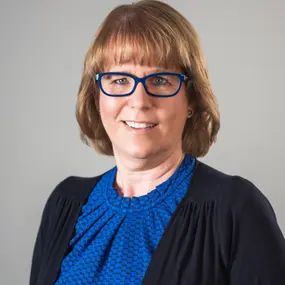
Director of Lifelong Learning
Mind: LeAnne has a master’s degree in education with a focus on health education. She has over twenty years of experience planning and implementing educational programs for adult learners. She is also a registered nurse with 10 years of hospital experience. She has first-hand caregiver experience with her live-in aging parents, helping them to maintain their quality of life despite complex health care needs. She is passionate about educating the community in practical ways they can learn to support their brain health and wellness.
Body: LeAnne walks three miles every morning with a friend. She is also trying to develop a consistent yoga and meditation practice – but this is a work in progress!
Heart: LeAnne loves to read (several different genres) and binge watch television series online (medical, law or family dramas). She and her husband Ron are avid soccer fans, having followed their two adult sons through all levels of youth, high school, and college soccer. Her older son is a local high school assistant soccer coach and her younger son is a professional soccer player – so the journey continues.
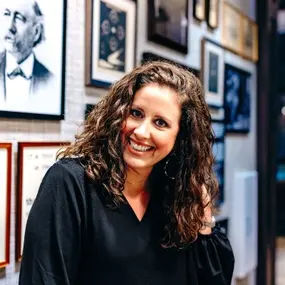
Speech Language Pathologist | Brain Health Coach
Heather Elwell, M.S., CCC-SLP is the Co-Host of the Neuro Nook (Book Club) and the Founder and CEO of Brain Health Mentors, where she supports people with proven lifestyle strategies to reduce the chances of getting dementia, improve mental clarity, and decrease brain fog. Drawing on her experience as a speech-language pathologist for over 25 years and as a health and wellness coach, she is passionate about teaching strategies to improve brain health. Heather has had the privilege to also be a speaker on brain health to organizations such as AARP, Raymond James, Tampa General Hospital, and the largest retirement community in the US, The Villages.