
 Apple Podcasts
 Spotify
 Amazon Music
  RSS Feed
 On the Same Brainwave: National Brain Health Day with Krystal & Jon
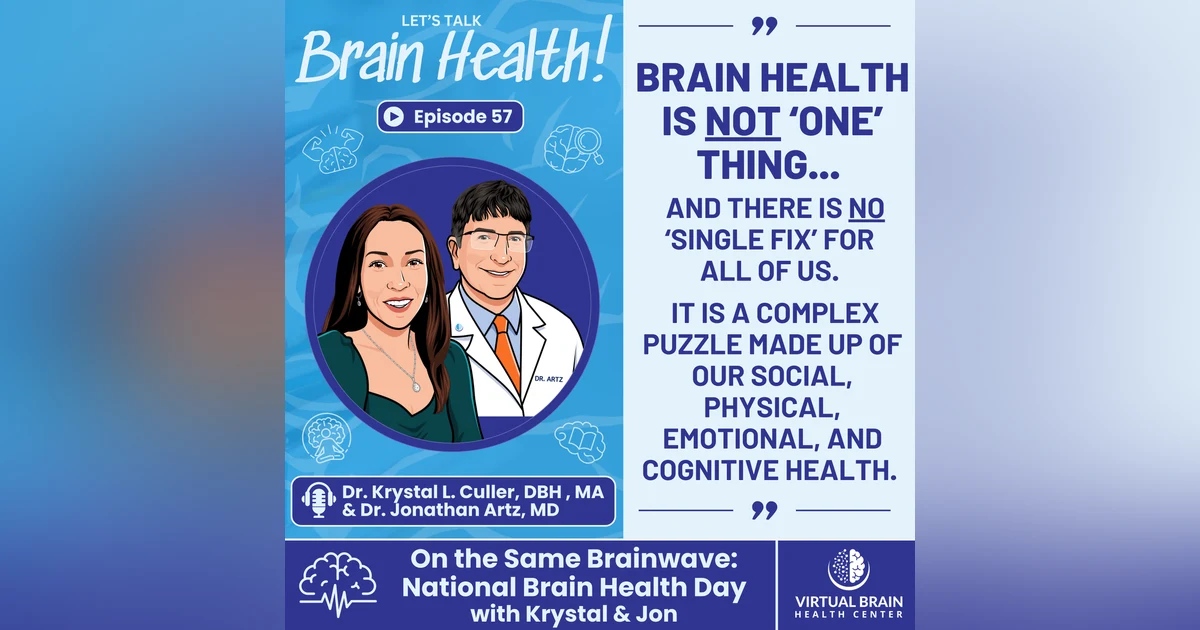
In this episode, hosts Krystal and Jon reconvene after a summer brain break to reflect on their journey of hosting the Let's Talk Brain Health! podcast over the past two years.
They revisit the origins of the podcast, which was initiated by their mutual interest in brain health and a desire to share insights. The episode covers a diverse range of topics, notable guests, and the broad audience they've engaged with to date.
Key themes include lifestyle interventions for brain health, the importance of early conversations about cognitive health, and the role of holistic wellness practices. The hosts also discuss emerging trends and future topics, emphasizing the continuous evolution in brain health research and practical applications for everyday life.
They conclude by inviting listeners to contribute their topic suggestions and wish them a Happy National Brain Health Day (September 15)! The podcast returns to its regular bi-weekly schedule starting Wednesday, October 1.
00:00 Welcome Back to Let's Talk Brain Health!
00:24 The Origins of Our Podcast Journey
02:38 Reflecting on Memorable Episodes and Guests
08:38 Listener Engagement and Global Reach
12:32 Insights from Recent Brain Health Research
25:23 Future Directions and Upcoming Topics
30:25 Wrapping Up and Looking Ahead
Resources:
Email us at podcast@virtualbrainhealthcenter.com with brain health topics you’d like us to explore in future episodes.
Learn more about Dr. Dean Ornish’s research study in our previous podcast conversation with him.
Link to the Alzheimer’s Association Brain Health Pointer Study Infographic- View it here
- Connect with Krystal on Substack for weekly brain health updates and her work at the Virtual Brain Health Center
- Connect with Jon on LinkedIn
00:00:02,640 --> 00:00:06,280
Welcome to the Let's Talk Brain
Health podcast, a public health
2
00:00:06,280 --> 00:00:08,920
educational initiative of the
virtual Brain Health Center.
3
00:00:09,240 --> 00:00:12,240
I'm your host, Doctor Crystal
Color, and I'm so glad you're
4
00:00:12,240 --> 00:00:14,880
here.
On this podcast, I sit down with
5
00:00:14,880 --> 00:00:18,240
incredible guests to explore all
things brain health and
6
00:00:18,240 --> 00:00:20,520
Wellness.
Together, we'll talk about how
7
00:00:20,520 --> 00:00:24,480
to care for your total brain
health, mind, body, and spirit
8
00:00:24,800 --> 00:00:28,160
while sharing the latest brain
Health Science practical tips
9
00:00:28,440 --> 00:00:30,720
and strategies you can use every
day.
10
00:00:31,240 --> 00:00:34,240
By prioritizing your brain
health, you're taking an
11
00:00:34,240 --> 00:00:37,320
important step towards living a
happier, healthier life.
12
00:00:37,840 --> 00:00:42,120
So let's dive in and welcome
today's guest, John.
13
00:00:42,120 --> 00:00:46,000
We've been on a bit of a brain
break from our podcasting and
14
00:00:46,000 --> 00:00:50,640
we're tuning up now for after
two years of Let's Talk Brain
15
00:00:50,640 --> 00:00:52,680
House.
So welcome back.
16
00:00:52,680 --> 00:00:56,560
I thought we'd take some time as
the host of this podcast to
17
00:00:56,560 --> 00:01:00,200
reflect on where we've been and
where we're going.
18
00:01:00,200 --> 00:01:02,320
Let's take a trip down memory
lane.
19
00:01:02,640 --> 00:01:05,440
Can you tell us how did we start
this podcast?
20
00:01:06,040 --> 00:01:10,640
Yeah, I think we met maybe 2 1/2
years ago on LinkedIn.
21
00:01:10,640 --> 00:01:14,520
Coincidentally, as some of the
viewers may know, we mentioned
22
00:01:14,520 --> 00:01:18,240
this in a couple podcasts.
We both are from West Virginia.
23
00:01:18,240 --> 00:01:21,080
That's not Virginia, that's West
Virginia.
24
00:01:21,360 --> 00:01:25,480
And we just had overlapping
interests and backgrounds in the
25
00:01:25,960 --> 00:01:29,440
brain health area.
And I noticed your website, the
26
00:01:29,440 --> 00:01:32,520
virtual brain Health Centers,
was very interesting to me as a
27
00:01:32,520 --> 00:01:37,040
clinician and a neurologist.
And I thought to myself, wow, I
28
00:01:37,040 --> 00:01:39,680
should ask Crystal to start a
podcast.
29
00:01:39,920 --> 00:01:43,480
And at that time, it looked like
on your website, there wasn't
30
00:01:43,480 --> 00:01:45,560
anything.
I think we just had some emails
31
00:01:45,560 --> 00:01:48,840
back and forth.
And then here's where we are two
32
00:01:48,840 --> 00:01:53,120
years later with over 50 posts
that have been on our podcast.
33
00:01:53,120 --> 00:01:57,920
And we've had many different
topics across a broad range of
34
00:01:57,920 --> 00:02:00,480
categories.
And hopefully this is going to
35
00:02:00,480 --> 00:02:04,280
continue for the future.
We can talk more about that in
36
00:02:04,280 --> 00:02:07,600
the next 30 minutes or so.
Yeah, I remember it was really
37
00:02:07,600 --> 00:02:10,600
exciting once to hear from you
and once we connected, it was
38
00:02:10,600 --> 00:02:12,640
just like riding similar brain
waves.
39
00:02:12,640 --> 00:02:14,840
So having complimentary
backgrounds, you being a
40
00:02:14,840 --> 00:02:17,800
neurologist, having that
clinical experience, my
41
00:02:17,800 --> 00:02:20,880
experience and the community
based brain health and to be
42
00:02:20,880 --> 00:02:24,200
honest, having to think about
doing a podcast was always on my
43
00:02:24,200 --> 00:02:25,640
mind.
And then once I heard from you
44
00:02:25,640 --> 00:02:28,600
was like, now's the time, let's
do it.
45
00:02:28,800 --> 00:02:33,440
And here we are two years later.
So we had initially launched on
46
00:02:33,440 --> 00:02:36,480
National Brain Health Day.
So now we're releasing this
47
00:02:36,480 --> 00:02:40,080
episode 2 years later.
And I'd like to welcome people
48
00:02:40,080 --> 00:02:43,280
if they are new to the podcast
or welcome them back if they've
49
00:02:43,280 --> 00:02:46,880
been tuning in before we had
launched with the first episode
50
00:02:46,880 --> 00:02:49,920
was to you, Doctor John Arts as
our Co host.
51
00:02:50,200 --> 00:02:54,160
And actually, before we took our
little brain break, we ended our
52
00:02:54,160 --> 00:02:59,440
two years on episode 56 with you
on reminding people of how to
53
00:02:59,440 --> 00:03:02,400
have the brain health
conversation with the healthcare
54
00:03:02,400 --> 00:03:06,160
provider and you share those
insights with our audience.
55
00:03:06,440 --> 00:03:10,040
It was episode 35 where my
counterpart Leanne had
56
00:03:10,040 --> 00:03:12,640
interviewed me from the virtual
brain Health Center where people
57
00:03:12,640 --> 00:03:15,760
could learn a little bit more
about me and my background when
58
00:03:15,760 --> 00:03:19,720
I think of topics surrounding
the hot ones that come to mind.
59
00:03:19,720 --> 00:03:23,360
Of course, nutrition, which when
we go to the fans favorites
60
00:03:23,360 --> 00:03:26,800
list, those are the top ones.
We've had Maggie Moon on twice
61
00:03:26,800 --> 00:03:30,760
talking about mind diet.
We've had Doctor Dean Ornish in
62
00:03:30,760 --> 00:03:34,760
his big study on multimodal
lifestyle interventions and
63
00:03:34,760 --> 00:03:37,360
brain health.
We've had people on in the
64
00:03:37,360 --> 00:03:41,320
clinical arena talking about
memory and early assessment.
65
00:03:41,480 --> 00:03:45,440
We had early on in the seasons,
Doctors Planoski's, the husband
66
00:03:45,440 --> 00:03:47,720
wife duo talking about that as
well.
67
00:03:47,720 --> 00:03:51,440
So we have covered a lot of
different areas as well as what
68
00:03:51,440 --> 00:03:54,280
are some of those practical
things that people can do where
69
00:03:54,280 --> 00:03:59,480
we've gotten into aromatherapy,
binaural beats that people can
70
00:03:59,480 --> 00:04:03,760
use some of these holistic
Wellness tools where hey, here's
71
00:04:03,760 --> 00:04:06,960
something you can try in your
day-to-day life that may help
72
00:04:06,960 --> 00:04:10,800
one aspect of your brain health
and well-being.
73
00:04:10,800 --> 00:04:14,000
And I think we may have been
surprised on some of these
74
00:04:14,000 --> 00:04:16,839
topics where we have talked with
guests and we've learned
75
00:04:16,839 --> 00:04:19,640
probably new things ourselves
along the way.
76
00:04:19,640 --> 00:04:21,640
It's been a bit of a learning
hub.
77
00:04:21,920 --> 00:04:25,800
Has there been a gastro topic,
John, that has just really
78
00:04:25,800 --> 00:04:28,280
shifted your thinking or where
you've learned something new
79
00:04:28,280 --> 00:04:30,440
along the way too in these last
two years?
80
00:04:31,040 --> 00:04:33,920
Yeah, the amazing thing about
the podcast and the way it was
81
00:04:33,920 --> 00:04:38,560
set up was that the goal was to
invite people that obviously had
82
00:04:38,560 --> 00:04:42,000
an interest in brain health and
helping other people do better.
83
00:04:42,040 --> 00:04:45,400
I keep using the word cognitive
health is a vital sign and I
84
00:04:45,440 --> 00:04:47,320
used it over and over.
I think it you just don't want
85
00:04:47,320 --> 00:04:50,000
the podcast that you interviewed
me on.
86
00:04:50,240 --> 00:04:55,120
And I think that there are some
themes regards of wherever the
87
00:04:55,680 --> 00:04:58,320
people came from that we invited
on the podcast.
88
00:04:58,320 --> 00:05:01,920
That seemed to be an important
take away point in the sense
89
00:05:01,920 --> 00:05:04,800
that you have an opportunity,
you have the time, you have to
90
00:05:04,800 --> 00:05:07,360
put in a little effort to
improve yourself.
91
00:05:07,360 --> 00:05:09,760
There's always usually for
everybody something to improve
92
00:05:09,760 --> 00:05:13,640
upon to make their brain in a
better place than they are at
93
00:05:13,640 --> 00:05:17,720
the present time.
And I actually don't really have
94
00:05:17,720 --> 00:05:21,280
a favorite of all the different
people because everybody had a
95
00:05:21,280 --> 00:05:23,320
unique interest.
And I actually learned a lot
96
00:05:23,320 --> 00:05:27,520
from everybody, whether it was a
medical physician, whether it
97
00:05:27,520 --> 00:05:30,240
was somebody who was
representing a patients or even
98
00:05:30,240 --> 00:05:38,080
a patient who had a condition or
a therapist or somebody who was
99
00:05:38,080 --> 00:05:40,800
talking about the importance of
the brain heart interaction,
100
00:05:40,800 --> 00:05:44,200
everything's been great.
Everybody seemed to really give
101
00:05:44,200 --> 00:05:48,240
back what they new in a very in
depth way and I'm glad to be
102
00:05:48,280 --> 00:05:50,720
part of this.
Share your sentiment.
103
00:05:50,720 --> 00:05:54,280
Where I think the one surprising
take away for me is we've been
104
00:05:54,280 --> 00:05:57,800
open with the broad vision of
what the podcast would be is we
105
00:05:57,800 --> 00:06:02,400
knew we wanted brain health
experts and that could be from
106
00:06:02,400 --> 00:06:05,640
their study discipline.
But also we had individuals who
107
00:06:05,640 --> 00:06:09,360
were open and willing to share
their lived experience, whether
108
00:06:09,360 --> 00:06:13,280
that was their own personal
journey or they had navigated
109
00:06:13,640 --> 00:06:16,600
some type of experience that
they had in their lives.
110
00:06:16,600 --> 00:06:20,040
And I think those almost meshed
at a lot of times when we had
111
00:06:20,040 --> 00:06:24,040
talked with people who had
either clinical expertise or
112
00:06:24,040 --> 00:06:27,360
degrees and there was something
that happened in their life that
113
00:06:27,360 --> 00:06:30,280
brought them into this brain
health space and they shared
114
00:06:30,560 --> 00:06:32,520
this story.
And for me, I've always just
115
00:06:32,520 --> 00:06:35,120
felt very honored that people
come in and share their
116
00:06:35,120 --> 00:06:38,800
authentic selves and have been
open with their story and that
117
00:06:38,800 --> 00:06:40,640
journey.
And I think even where there's
118
00:06:40,640 --> 00:06:43,880
times we've just invited guests
and they're like, yes, I'd like
119
00:06:43,880 --> 00:06:46,880
to come and I want you to talk
to my colleague too because they
120
00:06:46,880 --> 00:06:49,520
have this great story and
passion.
121
00:06:49,800 --> 00:06:54,400
I think I've been pleasantly
surprised overall in the broader
122
00:06:54,400 --> 00:06:57,880
brain health space of how many
people are here with the heart
123
00:06:58,320 --> 00:07:00,960
of wanting to actually help and
support people.
124
00:07:00,960 --> 00:07:04,440
It's not just this is their
day-to-day job, they're actually
125
00:07:04,440 --> 00:07:08,880
there with the caring support
and wanting to help others in
126
00:07:08,880 --> 00:07:13,720
this broader space and to find
real world solutions for people.
127
00:07:13,720 --> 00:07:16,600
Whether it's their journey that
they've navigated with a loved
128
00:07:16,600 --> 00:07:20,760
one to make lives easier or to
prove efficiencies in care in a
129
00:07:20,760 --> 00:07:25,200
healthcare system, or trying to
navigate community services for
130
00:07:25,200 --> 00:07:27,760
loved ones.
Someone has navigated this
131
00:07:27,760 --> 00:07:31,240
journey themselves and they want
it easier for the next person
132
00:07:31,240 --> 00:07:34,680
coming behind them and having
this innovation to find
133
00:07:34,680 --> 00:07:38,360
solutions and creativity and
connection and openness.
134
00:07:38,360 --> 00:07:41,800
So I think that's always been
the surprising part is just
135
00:07:41,840 --> 00:07:45,960
honestly realizing how many
people have this heartbeat along
136
00:07:45,960 --> 00:07:48,800
with their path, not just the
brains, they have the brain
137
00:07:48,800 --> 00:07:52,440
power to solve these problems
that are really this kindred
138
00:07:52,440 --> 00:07:55,280
hearts as well.
With all of our experts who have
139
00:07:55,280 --> 00:07:59,280
come on, especially those that
have shared openly their own
140
00:07:59,280 --> 00:08:02,240
personal brain care journeys and
what they've been doing or what
141
00:08:02,240 --> 00:08:04,800
they have learned to take care
of their brain health for
142
00:08:04,800 --> 00:08:08,040
themselves.
I was thinking about when this
143
00:08:08,040 --> 00:08:10,680
was first starting.
I had no qualms.
144
00:08:10,680 --> 00:08:14,960
I knew there was so much content
that we could draw from the
145
00:08:14,960 --> 00:08:20,560
various types of specialists,
clinicians, patients,
146
00:08:20,960 --> 00:08:24,320
caregivers.
I think that it was almost
147
00:08:24,320 --> 00:08:26,000
insurmountable about where to
start.
148
00:08:26,000 --> 00:08:30,000
But essentially, once this got
going, I think that there were
149
00:08:30,000 --> 00:08:34,320
actually some people that we
invited on the podcast where
150
00:08:34,320 --> 00:08:36,400
they actually were happy to be
on that.
151
00:08:36,400 --> 00:08:38,000
They were referring people to
us.
152
00:08:38,000 --> 00:08:40,480
And I think you got more of that
than I did because you were
153
00:08:40,799 --> 00:08:44,039
doing a lot of the organization.
But it's always good to know
154
00:08:44,039 --> 00:08:48,080
when people have a positive
experience and they forward on
155
00:08:48,480 --> 00:08:51,960
to somebody else that they think
would be good to come on to talk
156
00:08:51,960 --> 00:08:53,240
to us.
Yeah.
157
00:08:53,240 --> 00:08:56,760
And I think it's been really
nice to hearing some listeners
158
00:08:56,760 --> 00:09:00,080
who have decided to either
e-mail in or who have reached
159
00:09:00,080 --> 00:09:03,240
out or sometimes they have
commented through some of the
160
00:09:03,240 --> 00:09:06,320
channels where they're listening
in some feedback and have shared
161
00:09:06,320 --> 00:09:08,800
some of the topics that they're
wanting to know about.
162
00:09:09,000 --> 00:09:13,160
So I will let people know they
can always e-mail us at podcast
163
00:09:13,400 --> 00:09:20,440
at virtualbrainhealthcenter.com
with any topics or questions or
164
00:09:20,920 --> 00:09:23,920
a type of expert that they want
to know more about.
165
00:09:23,920 --> 00:09:27,720
I would say I think that's been
the best thing about having this
166
00:09:27,760 --> 00:09:31,320
broad frame of brain health.
John, I don't know about you.
167
00:09:31,440 --> 00:09:35,280
And at least the last 10-15
years there has not been a topic
168
00:09:35,280 --> 00:09:38,480
I haven't been able to link back
to the brain and brain health
169
00:09:38,480 --> 00:09:42,680
that people have thrown my way.
But we will openly accept that
170
00:09:42,680 --> 00:09:46,560
challenge for people if they're
want to e-mail something in of a
171
00:09:46,560 --> 00:09:50,720
topic that they want to know or
even something brain based
172
00:09:50,920 --> 00:09:54,040
specific condition with an
expert and getting brain care
173
00:09:54,040 --> 00:09:57,200
tools and strategies that we can
reach out to our networks and
174
00:09:57,200 --> 00:10:00,960
really start to explore that.
So please be sure to send those
175
00:10:00,960 --> 00:10:03,680
in for us.
John, I thought we'd like to
176
00:10:03,680 --> 00:10:07,440
recap where the listeners
response has been because I know
177
00:10:07,440 --> 00:10:11,520
for you, your whole idea and the
clinical setting and the vision
178
00:10:11,520 --> 00:10:15,920
for the podcast was we want to
talk to people earlier before
179
00:10:15,920 --> 00:10:19,600
they get into ideally you as a
neurologist in this office.
180
00:10:19,600 --> 00:10:22,600
And we have talked a little bit
more of this wanting to be a
181
00:10:22,600 --> 00:10:26,320
public health awareness
approach, really talking brain
182
00:10:26,320 --> 00:10:30,440
health for all ages and stages.
And I think we started to see
183
00:10:30,440 --> 00:10:33,680
snippets of this into some of
the conversations.
184
00:10:33,680 --> 00:10:36,240
But now we have about two years
of data.
185
00:10:36,480 --> 00:10:39,360
And I think one of the most
interesting things that we can
186
00:10:39,360 --> 00:10:43,600
share with our audience is we
have tapped into, at least in
187
00:10:43,600 --> 00:10:48,360
our 56 episodes, all age groups
reported into Bright House.
188
00:10:48,360 --> 00:10:51,520
So actually our largest
listening sector comes in from
189
00:10:51,520 --> 00:10:57,320
ages 45 to 59 before we want to
get to really what we would say
190
00:10:57,320 --> 00:11:03,160
aging adults being 60 and above
is actually our third largest
191
00:11:03,160 --> 00:11:06,080
age group.
The second largest age group
192
00:11:06,080 --> 00:11:09,840
would be my peers at ages 35 to
44.
193
00:11:09,840 --> 00:11:14,960
So we really have taken this
conversation upstream and the
194
00:11:15,000 --> 00:11:19,480
youth would really come into
combining them all with ages 34
195
00:11:19,480 --> 00:11:24,040
and younger is still 15% of our
listening group.
196
00:11:24,040 --> 00:11:28,240
So we have really tapped into
brain health being for all ages,
197
00:11:28,240 --> 00:11:32,640
which maybe speaks to the wide
variety of topics and guests
198
00:11:32,640 --> 00:11:35,720
that we have had on and piquing
people's interest.
199
00:11:35,720 --> 00:11:41,400
But to date, we are just shy of
about 7000 downloads across our
200
00:11:41,400 --> 00:11:45,400
56 episodes.
We've had listeners TuneIn from
201
00:11:45,400 --> 00:11:50,760
70 different countries with our
largest audience being US based,
202
00:11:50,760 --> 00:11:55,440
but still then going to Canada,
Australia, the United Kingdom,
203
00:11:55,880 --> 00:12:00,960
Ireland, India, Poland and
Germany for the next largest
204
00:12:00,960 --> 00:12:03,720
group.
So we thank you all for taking
205
00:12:03,720 --> 00:12:07,320
up this charge of better brain
health and investing into your
206
00:12:07,320 --> 00:12:10,120
brain care.
And we hope that our podcast
207
00:12:10,120 --> 00:12:14,640
gets to play one small piece of
the journey and information that
208
00:12:14,640 --> 00:12:19,440
you are looking for and finding
information about brain health
209
00:12:19,440 --> 00:12:24,080
in ways that you can apply the
latest brain Health Science into
210
00:12:24,080 --> 00:12:28,200
your day-to-day lives.
John, what do you think about
211
00:12:28,200 --> 00:12:33,080
after hearing that when this was
podcast with kind of our idea
212
00:12:33,080 --> 00:12:36,160
and your vision really was to
start the brain health
213
00:12:36,160 --> 00:12:39,720
conversation earlier and now
that we've caught those age
214
00:12:39,720 --> 00:12:42,440
groups and a bit of an
international audience?
215
00:12:43,160 --> 00:12:47,920
Yes, as a clinician and a
neurologist, seeing patients who
216
00:12:47,920 --> 00:12:52,120
are typically more in the 50s
and up group and seeing people
217
00:12:52,120 --> 00:12:56,080
who develop dementia issues,
whether it's from Alzheimer's or
218
00:12:56,080 --> 00:12:58,440
some other 'cause sometimes we
actually don't know what the
219
00:12:58,440 --> 00:13:03,800
actual cause is because some of
these issues are modifiable.
220
00:13:03,960 --> 00:13:08,200
For example, diabetes,
hypertension, some people have
221
00:13:08,200 --> 00:13:12,400
sleep disturbances like sleep
apnea, and often times people
222
00:13:12,400 --> 00:13:16,000
have multiple issues going on.
So the reality is I wanted to
223
00:13:16,000 --> 00:13:19,920
make people aware that there are
a lot of modifiable risk factors
224
00:13:19,920 --> 00:13:22,800
that are important in
maintaining your brain health
225
00:13:23,000 --> 00:13:26,000
and reducing the risk of
progression, whether you have a
226
00:13:26,000 --> 00:13:30,360
risk of a declining brain
condition based on genetics in
227
00:13:30,360 --> 00:13:33,640
your family or not.
And so you can talk Crystal
228
00:13:33,640 --> 00:13:36,840
about The Lancet study if you
want, because I know that was
229
00:13:36,840 --> 00:13:40,440
recently published.
It was an update about the
230
00:13:40,480 --> 00:13:43,240
importance of modifiable
lifestyle risk factors and
231
00:13:43,440 --> 00:13:46,400
towards brain health.
Yeah, and I think that's one
232
00:13:46,400 --> 00:13:49,360
that makes people have a lot
more awareness about of The
233
00:13:49,360 --> 00:13:54,320
Lancet Commission report shows
about 14 different risk factors
234
00:13:54,320 --> 00:13:57,520
and it does a life course
approach of what are ones that
235
00:13:57,520 --> 00:14:01,920
people can take action on to
mitigate risk for brain disease
236
00:14:02,400 --> 00:14:05,320
in later life.
And for most people we tend to
237
00:14:05,320 --> 00:14:08,240
have awareness around the
chronic health conditions that
238
00:14:08,240 --> 00:14:12,720
you could manage, high blood
pressure, diabetes, obesity,
239
00:14:12,920 --> 00:14:17,720
cholesterol, depression.
Other risk factors that come on
240
00:14:17,720 --> 00:14:21,560
related to managing long term
health conditions would be
241
00:14:21,560 --> 00:14:26,040
having a level of awareness of
your sensory health, which would
242
00:14:26,040 --> 00:14:31,080
include your hearing and your
uncorrected visual impairment.
243
00:14:31,080 --> 00:14:35,560
So looking at your sensory
health in terms of hearing and
244
00:14:35,560 --> 00:14:37,920
vision.
Then the other Atlantic
245
00:14:37,920 --> 00:14:42,880
Commission report lifestyle risk
factors look at elements of your
246
00:14:42,880 --> 00:14:48,160
holistic lifestyle related to
excessive alcohol use is defined
247
00:14:48,160 --> 00:14:53,440
as more than 21 units per week,
which here in the US that still
248
00:14:53,440 --> 00:14:59,120
exceeds recommended drinks per
day or per week for men and
249
00:14:59,120 --> 00:15:01,600
women.
Other lifestyle risk factors
250
00:15:01,600 --> 00:15:08,680
look at physical inactivity, not
smoking, social isolation and
251
00:15:08,680 --> 00:15:13,760
quality of education.
And then we know that our brains
252
00:15:13,760 --> 00:15:17,160
and our bodies exist within our
environment.
253
00:15:17,360 --> 00:15:21,680
So the last two risk factors
look at our environmental health
254
00:15:21,720 --> 00:15:25,640
are related to air pollution and
then head injury.
255
00:15:25,880 --> 00:15:32,000
So those overall are the 14 risk
factors related to brain health
256
00:15:32,400 --> 00:15:34,360
from The Lancet Commission
report.
257
00:15:34,360 --> 00:15:38,120
And I'd like to just acknowledge
that this is not all inclusive
258
00:15:38,160 --> 00:15:41,320
of brain health risk factors.
If you were to sit down with the
259
00:15:41,320 --> 00:15:45,960
healthcare provider like John,
there are other aspects of your
260
00:15:45,960 --> 00:15:50,880
health that would come online
like nutrition, sleep.
261
00:15:50,920 --> 00:15:57,480
There are also other ones that
gain popularity in media related
262
00:15:57,480 --> 00:16:01,560
to brain health.
So there's microplastics, we see
263
00:16:01,560 --> 00:16:05,640
the wildfire smoke, we see other
environmental risk factors,
264
00:16:05,640 --> 00:16:10,760
exposure to violence.
There's a lot more risk factors
265
00:16:11,160 --> 00:16:15,600
related to brain health to be
mindful of as we continue the
266
00:16:15,600 --> 00:16:19,040
conversation.
If you ever look through our
267
00:16:19,040 --> 00:16:23,120
resource library on our podcast
page, if you better want to
268
00:16:23,120 --> 00:16:26,400
understand heart health and its
relationship to brain health,
269
00:16:26,640 --> 00:16:30,240
you can look at some of those
very specific episodes where
270
00:16:30,240 --> 00:16:33,360
it's a bit of a deeper dive.
So there's some nice recaps
271
00:16:33,360 --> 00:16:35,800
there.
We also have some episodes that
272
00:16:35,800 --> 00:16:39,360
will be upcoming this year where
there's ones we just haven't got
273
00:16:39,360 --> 00:16:41,960
to sit down and do that deeper
dive yet.
274
00:16:42,200 --> 00:16:43,720
They're ones I'm looking forward
to.
275
00:16:43,720 --> 00:16:46,960
We're better understanding the
importance of social health and
276
00:16:46,960 --> 00:16:49,800
isolation.
Hopefully getting somebody on to
277
00:16:49,800 --> 00:16:53,680
talk about more environmental
health now that we're seeing
278
00:16:53,680 --> 00:16:56,240
that risk factor coming more
online.
279
00:16:56,240 --> 00:17:01,200
So it's almost exciting that as
this science is changing
280
00:17:01,200 --> 00:17:04,599
day-to-day with us, that we can
find experts who will come on
281
00:17:04,599 --> 00:17:07,960
and then give us that
relationship of that risk factor
282
00:17:08,160 --> 00:17:11,480
to our brain health.
Tell us the limit of the science
283
00:17:11,520 --> 00:17:14,480
as we know it now.
And also let us know what are
284
00:17:14,480 --> 00:17:18,160
the action steps we can take
today, that reassurance that we
285
00:17:18,160 --> 00:17:21,359
don't have to wait till there is
an issue or that we may end up
286
00:17:21,359 --> 00:17:24,839
in a provider's office.
What are the things we can do?
287
00:17:25,160 --> 00:17:28,119
And I think that's a lot of this
conversation around brain health
288
00:17:28,119 --> 00:17:31,280
and this whole point of this
podcast is the assurance that
289
00:17:31,280 --> 00:17:35,160
there are many things we can do
today to help support our brain
290
00:17:35,160 --> 00:17:37,480
health.
And John, I think for a lot of
291
00:17:37,480 --> 00:17:40,240
folks that may have heard some
of our conversations where we've
292
00:17:40,240 --> 00:17:42,400
gotten a chance to know a little
bit about you and your
293
00:17:42,400 --> 00:17:45,680
background is you've got lots of
projects going on.
294
00:17:45,680 --> 00:17:48,440
You're not just a clinician.
You get to teach, you're doing
295
00:17:48,440 --> 00:17:52,240
some research projects.
You contributed to one of the
296
00:17:52,240 --> 00:17:55,360
studies with Doctor Dean Ornish.
Would you like to give us a
297
00:17:55,360 --> 00:17:59,360
little bit of insights from his
lifestyle medicine study?
298
00:18:00,000 --> 00:18:04,360
I was involved in the very early
stages of Dean Ornish's study
299
00:18:04,360 --> 00:18:08,240
that initially started in 2018
and it lasted 4 years.
300
00:18:08,520 --> 00:18:12,400
It was published June the 7th
2024 in the Journal of
301
00:18:12,400 --> 00:18:14,000
Alzheimer's Research and
Therapy.
302
00:18:14,000 --> 00:18:19,000
Essentially it showed that in a
small group of people that
303
00:18:19,240 --> 00:18:23,040
received the multimodal
intervention, which essentially
304
00:18:23,040 --> 00:18:26,960
is Dean Ornish's same protocol
that uses to prevent heart
305
00:18:26,960 --> 00:18:31,640
disease, that study showed that
after 20 weeks that there was a
306
00:18:31,680 --> 00:18:36,640
clear benefit of people who
participated in a multimodal
307
00:18:36,800 --> 00:18:38,520
intervention.
So essentially we're dealing
308
00:18:38,520 --> 00:18:42,640
with in this study, there was
exercise in terms of walking,
309
00:18:42,640 --> 00:18:46,240
there was mild strength
exercises which included yoga,
310
00:18:46,520 --> 00:18:49,600
meditation.
Also there was the importance of
311
00:18:49,600 --> 00:18:52,560
the vegan diet.
There was a series of
312
00:18:52,640 --> 00:18:56,560
supplements that were used and
there was a stress reduction
313
00:18:56,560 --> 00:18:58,640
arm.
So the point is there were a lot
314
00:18:58,640 --> 00:19:01,760
of variables in the study, but
overall looked at the endpoints
315
00:19:01,760 --> 00:19:04,800
which essentially are they pick
specific that were associated
316
00:19:04,800 --> 00:19:09,360
with cognition and functioning
of a person who was at risk for
317
00:19:09,680 --> 00:19:13,280
developing or who had
Alzheimer's disease based in
318
00:19:13,280 --> 00:19:17,320
criteria that was used to put
the patients in the study and
319
00:19:17,320 --> 00:19:19,880
people specifically with mild
cognitive impairment or early
320
00:19:19,880 --> 00:19:23,800
stages of dementia related to
the Alzheimer's condition.
321
00:19:23,800 --> 00:19:27,400
They showed essentially that
using Dean Ornish's multimodal
322
00:19:27,520 --> 00:19:30,800
intervention study that patients
in the intervention group
323
00:19:30,800 --> 00:19:34,360
actually improved in their
cognition, which included
324
00:19:34,480 --> 00:19:39,160
memory, language, orientation
and or their basic functioning
325
00:19:39,160 --> 00:19:41,600
in day-to-day lives as an entire
group.
326
00:19:42,200 --> 00:19:46,600
Some people did not improve, but
the statistics supported a clear
327
00:19:46,920 --> 00:19:49,880
improvement in the majority of
the patients that were in the
328
00:19:49,880 --> 00:19:52,360
intervention group and actually
a worsening of the people that
329
00:19:52,360 --> 00:19:54,720
did not participate that
actually were in the control
330
00:19:54,720 --> 00:19:57,040
arm.
So he just presented 40 week
331
00:19:57,040 --> 00:19:59,200
data at the Alzheimer's
Association International
332
00:19:59,200 --> 00:20:04,000
Conference in July of.
This year and essentially it
333
00:20:04,000 --> 00:20:07,960
showed that his multimodal
lifestyle change continued to
334
00:20:08,000 --> 00:20:12,000
significantly improve cognition
and function at the 40 week
335
00:20:12,000 --> 00:20:14,200
point.
And the people that were in the
336
00:20:14,200 --> 00:20:19,200
control arm, which were half by
25 patients in the 1st 20 weeks,
337
00:20:19,200 --> 00:20:22,800
they actually transitioned or
they crossed over to participate
338
00:20:23,080 --> 00:20:26,600
for another 20 weeks getting the
intervention, which means they
339
00:20:26,600 --> 00:20:29,720
were part of getting the vegan
diet, participating in the
340
00:20:29,720 --> 00:20:33,960
strict exercise regimen,
following stress meditation and
341
00:20:34,040 --> 00:20:38,440
kind of supervision for stress
management related areas.
342
00:20:38,720 --> 00:20:42,440
And they actually improved.
So the key point is this is an
343
00:20:42,440 --> 00:20:45,800
ongoing and important topic
given that there's been several
344
00:20:45,800 --> 00:20:49,280
other studies coming out in the
last two months. the US Pointer
345
00:20:49,280 --> 00:20:53,360
study, which actually just was
published over the summertime as
346
00:20:53,360 --> 00:20:55,880
well, showed that again,
lifestyle changes are important
347
00:20:55,880 --> 00:20:59,120
in improving cognition and
maintaining functioning.
348
00:20:59,120 --> 00:21:04,280
People that were at risk to
develop cognitive decline or had
349
00:21:04,400 --> 00:21:07,880
risk factors which could include
diabetes, high blood pressure,
350
00:21:08,160 --> 00:21:10,720
lacking exercise, being
sedentary.
351
00:21:10,920 --> 00:21:14,080
So what we're seeing come
together for this year and for
352
00:21:14,080 --> 00:21:17,280
next year I think is we're going
to see the continued importance
353
00:21:17,280 --> 00:21:21,440
of lifestyle factors in a
scientific way improving and
354
00:21:21,440 --> 00:21:24,680
showing benefit to reduce the
risk of developing cognitive
355
00:21:24,680 --> 00:21:26,480
decline and maintaining
function.
356
00:21:26,680 --> 00:21:29,360
If you have a condition like
such as Alzheimer's, that there
357
00:21:29,360 --> 00:21:33,280
is important benefit for you to
change your daily day-to-day
358
00:21:33,280 --> 00:21:35,400
life.
For example, eat better, eat
359
00:21:35,400 --> 00:21:38,160
more fruits and vegetables such
as the Mediterranean diet or the
360
00:21:38,160 --> 00:21:42,280
MIND diet.
Exercise more, be cognizant of
361
00:21:42,280 --> 00:21:45,080
your level of stress.
Some of these things seem
362
00:21:45,080 --> 00:21:47,880
obvious, but the reality is now
we have the science behind it
363
00:21:48,080 --> 00:21:50,960
and there's always something to
do to improve your brain health.
364
00:21:50,960 --> 00:21:54,320
That's what the take away is.
Thank you for giving us the
365
00:21:54,440 --> 00:21:57,680
highlight of that research that
I think will be seeing more
366
00:21:57,680 --> 00:22:00,560
about this year.
I thought of just emphasizing
367
00:22:00,560 --> 00:22:03,920
there was quite a bit of talk
towards the end of this summer
368
00:22:03,920 --> 00:22:07,240
of Alzheimer's Association
International Conference came
369
00:22:07,240 --> 00:22:11,320
out lots of chatter about the
pointer study from the
370
00:22:11,320 --> 00:22:15,320
Alzheimer's Association.
They put out AUS Pointer brain
371
00:22:15,320 --> 00:22:18,600
health recipe.
I think all of us like those
372
00:22:18,600 --> 00:22:21,680
simple actionable items from the
research.
373
00:22:21,960 --> 00:22:26,000
So the POINTER study was a two
year clinical trial that found
374
00:22:26,000 --> 00:22:29,680
that simultaneously targeting
risk factors for cognitive
375
00:22:29,680 --> 00:22:34,520
decline that included regular
physical activity, a brain
376
00:22:34,520 --> 00:22:38,560
healthy diet, cognitive and
social engagement, plus health
377
00:22:38,560 --> 00:22:42,320
monitoring could improve brain
function in older adults.
378
00:22:42,680 --> 00:22:45,920
While the cognitive health of
all participants in the Point US
379
00:22:45,920 --> 00:22:49,160
POINTER study improved, the
group that followed the more
380
00:22:49,160 --> 00:22:53,360
structured program improved even
more, helping to protect
381
00:22:53,360 --> 00:22:57,480
thinking and memory from the
usual normal decline that often
382
00:22:57,480 --> 00:23:00,800
comes with aging over the two
year study period.
383
00:23:01,320 --> 00:23:05,480
These results provide powerful
actual guidance for promoting
384
00:23:05,480 --> 00:23:08,280
brain health and aging
populations.
385
00:23:08,640 --> 00:23:14,160
So their brain health recipe
that they offer is to monitor
386
00:23:14,600 --> 00:23:16,440
health.
So your regular check insurance
387
00:23:16,440 --> 00:23:19,600
on your blood pressure, your
weight and your lab results
388
00:23:19,960 --> 00:23:25,760
recommends physical exercise at
30 to 35 minutes, moderate to a
389
00:23:25,840 --> 00:23:29,520
tense aerobic activity.
So something that gets the heart
390
00:23:29,520 --> 00:23:32,800
rate up a little bit where it
would be hard for me and John to
391
00:23:32,800 --> 00:23:36,280
be having this conversation
right now about four times a
392
00:23:36,280 --> 00:23:40,520
week, plus strength and
flexibility exercises twice a
393
00:23:40,520 --> 00:23:42,440
week.
This is the protocol from the
394
00:23:42,440 --> 00:23:45,080
study.
It recommends cognitive
395
00:23:45,080 --> 00:23:49,400
exercises, so computer based
brain training program three
396
00:23:49,400 --> 00:23:53,960
times a week for 30 minutes plus
regular engagement and other
397
00:23:54,040 --> 00:23:57,360
intellectually challenging and
social activities.
398
00:23:57,680 --> 00:24:00,520
And much to what John was
pointing out early on nutrition
399
00:24:00,520 --> 00:24:04,280
piece in this study at the
adherence to the MIND diet,
400
00:24:04,840 --> 00:24:09,600
which we have two episodes on
from Maggie Moon about what are
401
00:24:09,600 --> 00:24:12,920
the aspects of the mind diet and
the benefits for brain health
402
00:24:12,920 --> 00:24:17,440
that you can learn more about.
This is the recipe from the
403
00:24:17,440 --> 00:24:20,720
pointer study on brain health.
So you can catch that in the
404
00:24:20,720 --> 00:24:24,640
show notes and find a little bit
more about the Pointer study.
405
00:24:24,640 --> 00:24:29,160
But I think, John, these two big
studies are pointing about to
406
00:24:29,800 --> 00:24:32,960
brain health is not one thing
and it's not going to be one
407
00:24:32,960 --> 00:24:36,080
thing that's going to fix brain
health for all of us.
408
00:24:36,080 --> 00:24:38,920
So we think it leads to the
conversations that we keep
409
00:24:38,920 --> 00:24:43,600
having with interdisciplinary
experts coming on and sharing
410
00:24:43,600 --> 00:24:46,560
from multiple different
backgrounds, but also all these
411
00:24:46,560 --> 00:24:50,120
different elements of your
holistic health, your social
412
00:24:50,120 --> 00:24:53,240
health, physical health,
emotional health, cognitive
413
00:24:53,240 --> 00:24:56,680
health, and how all those pieces
to put together this complex
414
00:24:56,680 --> 00:25:00,320
puzzle that is your brain that
scientists and all of us are
415
00:25:00,320 --> 00:25:04,840
still figuring out today.
Any insights for where you think
416
00:25:04,840 --> 00:25:08,720
that might come online for what
you think you'll see either in
417
00:25:08,720 --> 00:25:12,120
this next year, John, in our
conversations or what might be
418
00:25:12,120 --> 00:25:15,080
coming forward and the aspects
of clinical brain health, what
419
00:25:15,080 --> 00:25:18,680
we might expect?
Yeah, I think we're going to see
420
00:25:18,680 --> 00:25:21,520
artificial intelligence.
I know it's all in the news
421
00:25:21,520 --> 00:25:24,040
right now.
AII think we're going to see in
422
00:25:24,040 --> 00:25:30,600
medicine and increase tendency
for programs or apps to identify
423
00:25:30,920 --> 00:25:35,280
percentiles risk factors based
on a person's historical
424
00:25:35,280 --> 00:25:39,200
information and pretty much
uploading or whether going into
425
00:25:39,200 --> 00:25:43,160
the health into your computer,
your personal record through
426
00:25:43,160 --> 00:25:45,200
your physician.
I don't think that's coming this
427
00:25:45,200 --> 00:25:47,880
coming year, but I think in the
next several years it will be
428
00:25:47,880 --> 00:25:51,000
available where we'll do a risk
analysis of the person's
429
00:25:51,000 --> 00:25:54,200
situation and saying, hey, these
are the factors you need to
430
00:25:54,200 --> 00:25:57,920
really take seriously because in
your situation, maybe you have a
431
00:25:57,920 --> 00:26:00,960
family history of a dementia
condition, whether it's a known
432
00:26:00,960 --> 00:26:03,920
or unknown condition.
Some people have a pretty good
433
00:26:03,920 --> 00:26:06,440
identification of their parents
or grandparents had, for
434
00:26:06,440 --> 00:26:09,200
example, Alzheimer's, which is
pretty much the most common
435
00:26:09,200 --> 00:26:11,920
neurodegenerative disease that
can cause slowly progressive
436
00:26:11,920 --> 00:26:14,080
brain loss.
But interestingly, which is
437
00:26:14,080 --> 00:26:16,960
really if you look, and I just
want to make this comment
438
00:26:16,960 --> 00:26:19,360
because there's drugs coming out
and they're going to continue to
439
00:26:19,360 --> 00:26:23,680
come out for Alzheimer's disease
such as GLP, one agonist such as
440
00:26:23,680 --> 00:26:26,680
Ozempic, They're being studied.
There's at least three trials
441
00:26:26,680 --> 00:26:29,760
are going to come out next year
that are affecting your
442
00:26:29,760 --> 00:26:33,080
metabolism that I suspect are
going to have benefits.
443
00:26:33,080 --> 00:26:36,480
And people that are at risk for
dementia, whether it's
444
00:26:36,480 --> 00:26:40,880
Alzheimer's or not and or using
AI will be able to identify
445
00:26:40,880 --> 00:26:44,720
people either for research, to
make research more robust in
446
00:26:44,720 --> 00:26:48,120
terms of developing better
trials, but also for a
447
00:26:48,120 --> 00:26:52,400
personalized medicine effect to
say to yourself, hey, you need
448
00:26:52,400 --> 00:26:54,760
to look at these three factors
because this is going to
449
00:26:54,760 --> 00:26:58,640
contribute to maybe a 30% risk
of your developing cognitive
450
00:26:58,640 --> 00:27:00,920
decline in the next 5 years.
So I think we're going to have
451
00:27:00,920 --> 00:27:03,800
better statistics and it'll be
more personalized medicine
452
00:27:03,800 --> 00:27:05,600
because of artificial
intelligence.
453
00:27:06,560 --> 00:27:09,760
And I think that's the part
where a lot of the community
454
00:27:09,760 --> 00:27:12,080
based brain health will be
going.
455
00:27:12,080 --> 00:27:15,680
And I just think in the time
we're at, John, with at least
456
00:27:15,680 --> 00:27:19,760
the state of public health in
the US is brain health is
457
00:27:19,760 --> 00:27:22,840
desperately needed in terms of
messaging.
458
00:27:22,840 --> 00:27:26,840
And I'm glad to hear that our
podcast reaches all age groups.
459
00:27:26,840 --> 00:27:30,880
But I think right now, the time
that we're in is for people to
460
00:27:30,880 --> 00:27:35,320
better understand their brain
and the control that they do
461
00:27:35,320 --> 00:27:39,600
have over their brain health.
The things that they can do with
462
00:27:39,640 --> 00:27:44,560
just the environment that we're
in with social media and all of
463
00:27:44,560 --> 00:27:48,560
these things that are taking
advantage of your brain.
464
00:27:48,680 --> 00:27:52,760
You have teams of people that
are out there manipulating you
465
00:27:53,120 --> 00:27:57,680
for your time or to buy things
or to exploit your attention for
466
00:27:57,680 --> 00:28:01,080
things that aren't good for you.
But when you can actually get
467
00:28:01,080 --> 00:28:04,680
the education to better
understand your brain, that you
468
00:28:04,680 --> 00:28:09,040
could put your phone down and
disconnect and go invest in your
469
00:28:09,040 --> 00:28:12,920
own physical exercise or
something for your emotional
470
00:28:12,920 --> 00:28:14,760
health.
And that when you can get these
471
00:28:14,760 --> 00:28:18,720
skills in, these tools that you
can use that are your brain
472
00:28:18,720 --> 00:28:21,880
skills in your day-to-day life
and that you better understand
473
00:28:21,880 --> 00:28:24,320
your brain, how different life
can look.
474
00:28:24,320 --> 00:28:27,400
And I like to think that's where
this podcast can play a role in
475
00:28:27,400 --> 00:28:31,880
to help getting people some of
this education and exposure to
476
00:28:31,880 --> 00:28:34,080
different experts or different
disciplines.
477
00:28:34,080 --> 00:28:38,240
Where even if you do use your
phone and you find an app and
478
00:28:38,240 --> 00:28:41,680
you go listen to binaural beats
or you use a meditation and you
479
00:28:41,680 --> 00:28:46,120
find a new strategy that you can
use to take care of your brain.
480
00:28:46,440 --> 00:28:50,080
Or find a different expert where
hey, just like you said, your
481
00:28:50,080 --> 00:28:54,040
nutrition has you at risk, but
there's somewhere you can reach
482
00:28:54,040 --> 00:28:58,120
out to better understand
nutrition for yourself.
483
00:28:58,480 --> 00:29:00,880
Then that's a tool and strategy
that you can use now.
484
00:29:00,880 --> 00:29:05,320
But I think really where I can
see community based brain health
485
00:29:05,320 --> 00:29:08,920
is a lot of this education and
empowerment and letting people
486
00:29:08,920 --> 00:29:12,800
know that it is for all of us
and that there are things we can
487
00:29:12,800 --> 00:29:14,200
do.
Because I think for a lot of
488
00:29:14,200 --> 00:29:17,560
times the messaging gets missed
that it's almost like you have
489
00:29:17,560 --> 00:29:20,960
to wait till there's an issue or
so many of us think brain
490
00:29:20,960 --> 00:29:23,080
health's not for us.
It's not for now.
491
00:29:23,480 --> 00:29:26,800
We tend to think it's for
everybody else, not us, or it's
492
00:29:26,800 --> 00:29:30,480
for older adults or for someone
that has a brain based
493
00:29:30,480 --> 00:29:32,800
condition.
And it's really for all of us.
494
00:29:32,800 --> 00:29:36,920
And so I'm very grateful to see
that our podcast is captured a
495
00:29:36,960 --> 00:29:41,400
glimpse of that audience of all
ages tuning in different people
496
00:29:41,400 --> 00:29:44,840
from across the world and hope
that's what we can see in a lot
497
00:29:44,840 --> 00:29:48,560
of the community based settings
are these tools and strategies
498
00:29:48,560 --> 00:29:51,840
that people can use in their
day-to-day lives as all of us
499
00:29:51,840 --> 00:29:56,280
are navigating brain health
together every single day.
500
00:29:56,520 --> 00:29:59,920
John, what's next for the
podcast in this next year for
501
00:29:59,920 --> 00:30:03,360
our listeners?
That is a very tough question,
502
00:30:03,360 --> 00:30:08,200
but I have to have more
researchers on the podcast that
503
00:30:08,200 --> 00:30:11,360
are doing groundbreaking
research, and I'd love to go
504
00:30:11,360 --> 00:30:13,920
into more depth about the
importance of sleep, which I
505
00:30:13,920 --> 00:30:16,600
think is underrepresented in
brain health, do.
506
00:30:17,000 --> 00:30:20,360
You have a sneak peek for us of
who's kicking off our next year
507
00:30:20,360 --> 00:30:23,920
on the podcast.
Doctor Neotus is the first
508
00:30:23,920 --> 00:30:27,600
preventative neurologist trained
in the United States.
509
00:30:27,600 --> 00:30:32,920
She is a strong advocate for
reducing risk and the importance
510
00:30:32,920 --> 00:30:37,800
of, for example, lipid
metabolism, cholesterol changes,
511
00:30:37,800 --> 00:30:41,880
hypertension.
She is a new wave of the next
512
00:30:41,920 --> 00:30:45,160
group of neurologists, and I
hope there's more of her to
513
00:30:45,200 --> 00:30:48,560
encourage the importance of
literally what we've been
514
00:30:48,560 --> 00:30:52,280
talking about throughout the
last two years by by all the
515
00:30:52,280 --> 00:30:57,000
different people that have come
on our podcast to discuss the
516
00:30:57,000 --> 00:31:00,160
various factors that are
important in keeping your brain
517
00:31:00,160 --> 00:31:04,040
in a healthy state.
I think I'm just really excited.
518
00:31:04,040 --> 00:31:07,680
We've had always had this
running list of topics and I
519
00:31:07,680 --> 00:31:10,960
remember you said at some point
we won't have to keep reaching
520
00:31:10,960 --> 00:31:13,200
out.
People will start coming to us.
521
00:31:13,200 --> 00:31:16,920
And we've had this balanced
shift where just as you said,
522
00:31:16,920 --> 00:31:20,440
like we want to talk with the
sleep researcher, we can reach
523
00:31:20,440 --> 00:31:23,200
out to find some folks or to
network our way through, but
524
00:31:23,200 --> 00:31:27,080
also to have some people coming
our way where we can get to this
525
00:31:27,080 --> 00:31:30,840
list of topics that we know are
important to brain health.
526
00:31:30,840 --> 00:31:33,880
And we want to dive a little bit
deeper to bring that awareness
527
00:31:33,880 --> 00:31:35,680
to.
So I just want to remind our
528
00:31:35,680 --> 00:31:38,720
listeners, if there's a topic on
your mind, please do not ever
529
00:31:38,720 --> 00:31:43,280
hesitate to send that our way.
And I'm also very optimistic as
530
00:31:43,280 --> 00:31:46,400
well as some of the lived
experience stories that people
531
00:31:46,680 --> 00:31:49,760
will be sharing.
I'd like to just thank our loyal
532
00:31:49,760 --> 00:31:52,720
listeners who maybe have been
with us since day one or people
533
00:31:52,720 --> 00:31:57,320
who may be new to the podcast
for investing our time and
534
00:31:57,320 --> 00:32:00,560
energy into their brain care by
either listening to today's
535
00:32:00,560 --> 00:32:04,080
episode or have tuned into other
episodes.
536
00:32:04,080 --> 00:32:07,360
Or hopefully maybe now they've
given us a follow and we'll get
537
00:32:07,360 --> 00:32:09,960
the alert to when new episodes
release.
538
00:32:09,960 --> 00:32:14,360
But we will be back to ideally
releasing episodes twice a month
539
00:32:14,360 --> 00:32:18,200
on Wednesday, so typically about
every other week with other
540
00:32:18,200 --> 00:32:21,680
experts, lived experience, as
well as clinical experts and
541
00:32:21,680 --> 00:32:25,280
researchers and many other
topics related to brain health
542
00:32:25,280 --> 00:32:27,840
in the coming year.
And we hope people will.
543
00:32:27,840 --> 00:32:31,600
TuneIn, John, thanks for being
the Co host of this podcast.
544
00:32:31,600 --> 00:32:33,960
I'm excited for what the next
year will be.
545
00:32:34,160 --> 00:32:38,080
And I guess we can end with
telling everyone happy National
546
00:32:38,080 --> 00:32:41,320
Brain Health Day.
It always seems the perfect day
547
00:32:41,560 --> 00:32:45,160
to celebrate another year of the
Let's Talk Brain Health podcast.
548
00:32:45,840 --> 00:32:49,440
Thank you for investing your
time and energy into your
549
00:32:49,440 --> 00:32:52,960
personal brain care by listening
to today's episode of the Let's
550
00:32:52,960 --> 00:32:56,360
Talk Brain Health Podcast.
I hope our conversation gave you
551
00:32:56,360 --> 00:33:00,120
fresh insights, a bit of
inspiration, or practical steps
552
00:33:00,120 --> 00:33:03,360
that you can take on your own
personal brain care journey.
553
00:33:03,800 --> 00:33:06,680
If you enjoyed today's
conversation, I'd like to ask
554
00:33:06,680 --> 00:33:09,520
you to please share this episode
with someone who could benefit
555
00:33:09,520 --> 00:33:12,040
from it or consider leaving us a
review.
556
00:33:12,600 --> 00:33:15,840
If you have questions or a topic
in brain health you'd like me to
557
00:33:15,840 --> 00:33:19,760
explore, please e-mail me
anytime at podcast at
558
00:33:19,760 --> 00:33:23,440
virtualbrainhealthcenter.com.
I'd love to hear from you.
559
00:33:23,760 --> 00:33:27,760
We have so many more exciting
topics ahead, and I can't wait
560
00:33:27,760 --> 00:33:30,760
to continue this lifelong
journey of better brain health
561
00:33:30,760 --> 00:33:34,040
together with you and our
growing virtual community.
562
00:33:34,480 --> 00:33:37,560
Until next time, remember to
give your brain the care it
563
00:33:37,560 --> 00:33:40,760
deserves and make your brain
health a priority.