
 Apple Podcasts
 Spotify
 Amazon Music
  RSS Feed
 What Is Brain Fog and What Can You Actually Do About It? with Dr. Reza Hosseini Ghomi, MD, MSc
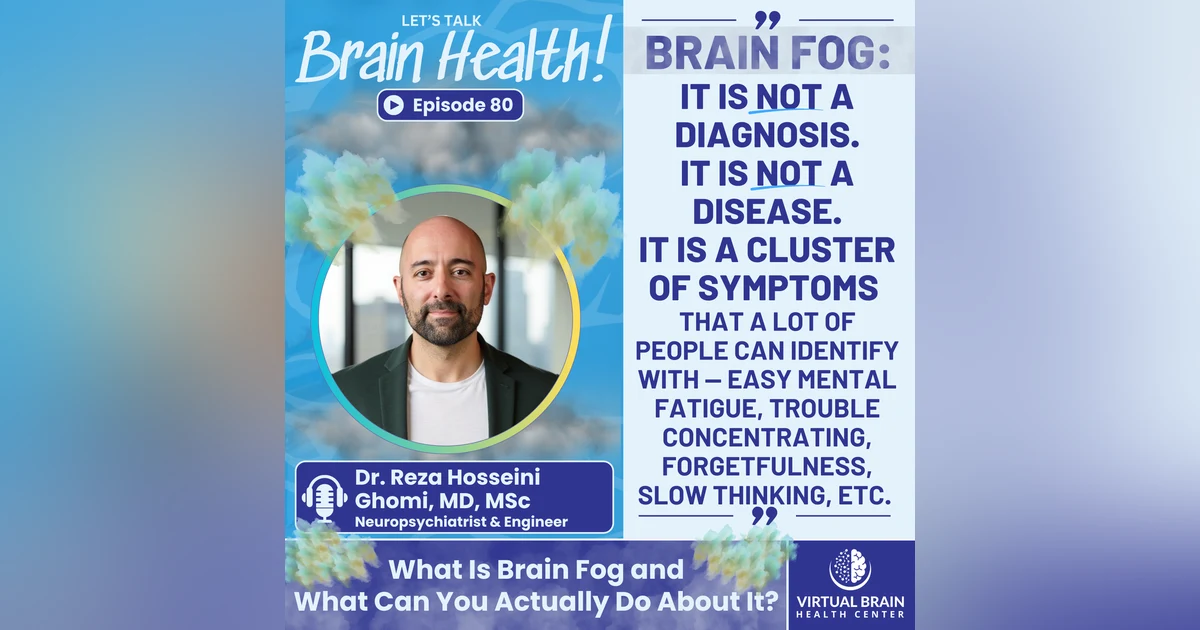
You know something is off. The word you were reaching for is gone. The thought dissolves before you finish it. You read the same sentence three times and still cannot hold onto it.
That is brain fog. And in this episode of the Let's Talk Brain Health! Podcast, Dr. Krystal Culler sits down with Dr. Reza Hosseini Ghomi — neuropsychiatrist, biomedical engineer, and serial health-tech founder — to finally give it the language, the science, and the path forward it deserves.
Brain fog is one of the most common complaints in brain health — and one of the most dismissed. Most people are told they are tired, stressed, or just getting older. Today that changes.
Dr. Ghomi sees patients with a focus on neurodegenerative disorders and cognitive health across a wide range of conditions — including the growing wave of post-COVID cognitive complaints. His message is clear: brain fog is real, it is worth investigating, and in most cases it is reversible.
What You'll Learn in This Episode
🧠 What brain fog actually is — and why it is a symptom cluster, not a diagnosis
🧠 The full range of symptoms to recognize — from mental fatigue and forgetfulness to word-finding difficulties and slow processing
🧠 How brain fog may present differently in women versus men — including perimenopause, postpartum, thyroid disorders, and hormonal shifts
🧠 How to talk to a healthcare provider about brain fog — and what to bring to that appointment to be taken seriously
🧠 The biggest myths and misconceptions about brain fog — including why "it's all in your head" is both wrong and dismissive
🧠 The three most evidence-informed lifestyle factors contributing to brain fog — sleep, physical activity, and metabolic and nutritional stability
🧠 Why blood sugar swings, vitamin deficiencies, and iron levels matter more than most people realize
🧠 How wearable devices and symptom tracking can help you and your provider identify patterns
🧠 A real patient case study — a woman in her late 40s caring for a parent with Alzheimer's who recovered from significant brain fog in 90 days
🧠 Why brain fog is a signal — not a sentence — and what that means for your brain health journey
Key Takeaways
✔ Brain fog is not a diagnosis — it is a cluster of symptoms worth tracking, naming, and taking to a provider
✔ It is almost always reversible — and the sooner you address it, the more preventable the underlying causes become
✔ Sleep is the highest-leverage lifestyle factor — protect it like the non-negotiable it is
✔ Come to your appointment with data — a symptom diary, medications, supplements, and nutritional patterns make a significant difference
✔ Do not accept dismissal — advocate for yourself, and if one provider does not help, find another
✔ Brain fog is your brain communicating — not failing. Listen to what it is asking for
Earn FREE CE/CMEs
This podcast qualifies for continuing education credit for the following healthcare professionals: Physicians (AMA PRA Category 1 Credit™), Nurses (ANCC), Pharmacists (ACPE), Physician Associates (AAPA), Dentists (ADA CERP), Dietitians (CDR), Social Workers (ASWB), Psychologists (APA), Athletic Trainers (BOC), and Interprofessional Continuing Education (IPCE).
Each eligible episode offers 0.5 hours of FREE CE credit. Not seeing your profession listed? You will receive a Certificate of Participation to submit to your licensing board for possible credit approval.
Join the Learn at Pinnacle app to earn FREE CE credit for listening to this episode — available on the Apple App Store and Google Play.
Thank you for investing your time and energy into your brain health. A special thank you to Dr. Reza Hosseini Ghomi, MD for reminding us that brain fog is a signal — not a sentence — and that you are allowed to feel better.
Resources
Continue to learn more with Dr. Reza Hosseini Ghomi at rezahg.com
Stay connected with Dr. Ghomi on social media on LinkedIn, Instagram, and TikTok @drrezaghomi