
 Apple Podcasts

 Spotify

 Amazon Music
 RSS Feed
Women’s Brain Health: Holistic Lifestyle Approaches to Perimenopause with Dr. Julie Sharrar, DC
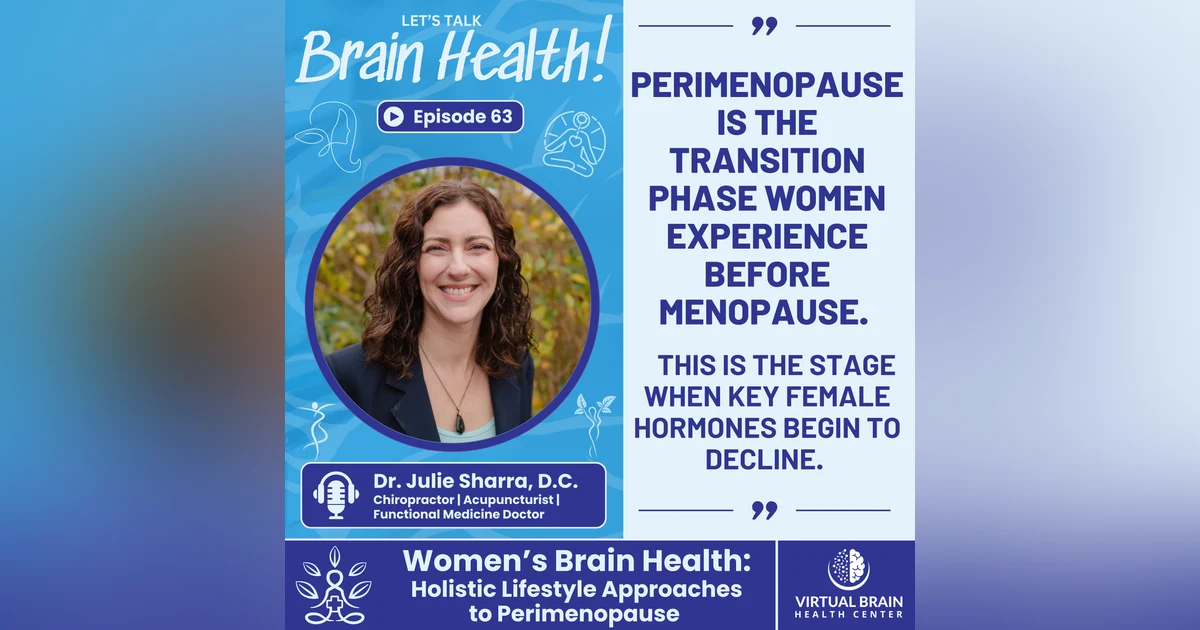

In this episode of the Let's Talk Brain Health Podcast, we delve into perimenopause, a significant yet often misunderstood life transition. Dr. Julie Sharrar, DC, a holistic healthcare practitioner specializing in chiropractic, acupuncture, and functional medicine, shares her expertise on how this phase impacts brain health, mood, memory, and overall well-being.
She provides insights into common symptoms, natural support strategies like diet, sleep, and exercise, and the benefits of holistic approaches such as acupuncture. Learn the importance of recognizing and addressing these changes with practical tips and resources to help navigate this journey with confidence.
00:00 Introduction to Perimenopause
00:44 Meet Dr. Julie: Expert in Women's Health
02:03 Understanding Perimenopause: Symptoms and Onset
07:23 Lifestyle Changes to Support Perimenopause
12:06 Functional Medicine and Acupuncture
16:45 Practical Advice and Misconceptions
20:09 Final Thoughts and Resources
Resources
0:02 Welcome to the Let's Talk Brain Health podcast, a public health educational initiative of the virtual Brain Health Center. I'm your host, Doctor Crystal Color, and I'm so glad you're here. On this podcast, I sit down with incredible guests to explore all things brain health and Wellness. Together, we'll talk about how to care for your total brain health, mind, body, and spirit while sharing the latest brain Health Science practical tips and strategies you can use everyday. By prioritizing your brain health, you're taking an important step towards living a happier, healthier life. So let's dive in and welcome today's guest.
0:44 Today we're exploring perimenopause, a natural life transition that affects millions of people but few talk about openly. These hormonal changes can impact mood, memory, energy, and overall brain health. Whether you are experiencing these changes yourself or supporting someone in your life who is, this episode is for you. Before we begin, I want to remind our listeners that this podcast is for educational purposes only. It is not a substitute for medical advice. Please consult your healthcare provider for questions regarding any stage of the menopause journey.
1:24 Now we're going to talk about it with today's expert guest. Doctor Julie has been a practicing chiropractor and acupuncturist for over 15 years. Over the last two years, she has incorporated functional medicine into her practice. She works with a lot of women during the transitional phase of life known as perimenopause and women going through menopause and postmenopause. Dr. Julie loves to stay active by doing kickboxing, walking, and traveling. So Doctor Julie, is there any additional information about your background that you'd like to share with us that we didn't mention it in the introduction? No, that's pretty much about sums it up. I have been a chiropractic patient myself since I was in high school, which is how I got into the holistic health world, so I've been in it for a very long time. Julie, welcome to the podcast.
2:24 I'm so glad we got to connect and meet in person. And now to have you on to share your expertise with our audience today. I'm curious now that you shared, what brought you into the broader holistic Wellness space, What has shifted your pivot to focus on women's brain health issues, especially around perimenopause or menopause in general? Yeah, so about four years ago, I opened my own practice and I was seeing a lot of women, women in their 30s, their 40s and their 50s were coming to me with all the same types of symptoms, anxiety, depression, trouble sleeping. And they would come to me for acupuncture. And the more I drove into it, I realized many of these women are starting that perimenopause phase of life. They were experiencing all these symptoms and they had no idea why.
3:22 So once I started to research and learn more about that stage of life, I was like, these women need help. There's not a lot of help in the main medical stream right now for these women. So I'm like, we can help these women. So I just started learning more and that's how I got into the functional medicine side of things. How can we help these women through that transition period in life? Thank you so much for sharing how that all started to come together through your personal journey as well as your professional space and your practice. And I think to start today's conversation, you already began to allude a little bit about symptoms of perimenopause, but how would you actually define the period of perimenopause for our listeners? Because I think for a lot of us, it really is confusing as someone that may be a female or someone that's supporting someone they love.
4:17 When we hear this term perimenopause, what is it? Yeah. So the perimenopause is that transition period in life for women, the stage before menopause. This is the period when the different female hormones that most of us have heard of start to decline. So estrogen and progesterone are the most common that women know about. That's the period when the hormones start to decline and their bodies starting to transition into the phase. Now, what most women don't realize is perimenopause can start as early as 35. When I found that out, I couldn't believe it myself, honestly.
4:58 And I've been in this space for 20 years. And then the other thing that many women don't realize is that perimenopause come back up to 10 years. I learn new things every day. Although I'm not really surprised. My sister had early symptoms, age, onset of perimenopause and it took a long time for a healthcare provider to take her symptoms seriously. And once she did find someone in Females Health, how quickly that could turn around. And I shouldn't say quickly about a year and a half of getting someone to really pay attention, but to get symptom relief in terms of that, what are some of those hallmark symptoms that may really start to raise the flag that, hey, this may be indicative of perimenopause? To start that conversation with your healthcare provider or to maybe even give you insights that, oh, this is something to really pay attention to now for myself. Yes, absolutely.
5:57 So there is a laundry list of symptoms, but I want to throw out some things out there for the women maybe to watch out for. First off, just experiencing depression and anxiety when maybe you never had it before. That's very common. Another one I see a lot is just trouble sleeping at night. Even though you're getting 8 hours of sleep, you get 8 hours of sleep but you're not feeling rested or you wake up and you feel tired. Just mood changes. Normally in our fertile years we're very Moody leading up to our period. Now in perimenopause, maybe we're Moody all the time, we're more irritable, we have a very short fuse.
6:41 Another common 1 is just cognition changes. So you start having short term memory wise, you walk into a room and you forgot why you walked into the room. Many things, but those are just some of the very common ones that women may not realize that are related. Everybody thinks of menopause, they think of hot flashes, but they don't realize all these other changes that come with it as well. So to reiterate what you said, these would be symptoms that are very different from your norm. So you may have the typical forgetfulness, but when it becomes more common or the moodiness is much more frequent.
7:23 So to pay not to not pay attention to those things, Don't be dismissive of it. Is there any other symptoms you want to highlight that may fall under this brain health umbrella before we move on to what we can do about our lifestyle? I think along with the cognition, it's just a lot of brain fog, not thinking as clear. You can't concentrate as well on the task at hand. So I want to mention that in terms of brain health as well, I'd say yeah, that would probably be the main thing. Once women begin to recognize these changes, even if they maybe haven't associated it with perimenopause, are there things that they can start doing to support themselves naturally, like lifestyle changes or habits that can make a big difference for them? Yes, absolutely.
8:19 So number one is diet, what you're eating, what you're putting into your body. If you are consuming too much sugar or refined carbs or alcohol, that's really going to mess with your hormones. Just really focusing on shifting your eating habits to Whole Foods, making sure you're getting enough protein and fiber every day, and obviously fruits and vegetables and staying away from the things that might spike your blood sugar, which is very closely intertwined with your cortisol, your stress hormone, and then your female hormone diet. Number one.
9:03 Also number one is sleep. Some women are still not getting enough sleep at night. In that phase of life you really do need to try to shoot for about 8 hours of good rested sleep. Making sure you have good sleep hygiene by that, taking the same time to go to bed every night and waking up at the same time every day. And then putting away those screens right before bed and putting away any type of blue light or screens about an hour before bed. Otherwise you will not have a Restful sleep. You've mentioned two big ones, diet and sleep. What about physical activity?
9:46 What type of impact does that have during this time of life? And do you have specific types of physical activity that you recommend for people during this time period? Yeah, First off, every human adult should be getting about 7000 steps a day, and that's based off a very long research study. So 7000 steps a day at least help to decrease your risk of disease and mortality. For women specifically, they need to start incorporating strength training, so important during that phase of life. I say shoot for twice a week. You don't have to be strength training five days a week. You're not trying to become a bodybuilder. You're trying to maintain your bones and your muscles. So shoot for about twice a week with strength training either. Find a good class where they teach you how to properly strength train the tons of resources out there out for women in terms of that.
10:47 So yeah, basically the strength training, The Walking is important in terms of helping to regulate your blood sugar and your hormones, especially walking outside in nature that help with your mood. So in terms of brain health, making sure you're getting outside in nature. So it's important every day. You covered a lot of the big areas of lifestyle. Is there any other one that you want to highlight before we get to some of the aspects of functional medicine that you do with those you support through your practice? I think that would be the major thing that just physical activity, sleep and diet is everything. And I know we're going to dive into some other helpful things as well, but lifestyle wise, those are everything. And those really are the main pillars of our life. And I don't like to gloss over them of this require a lot of our energy and our time to get those solid because it takes a lot to overhaul our diet or it takes a lot to get our sleep on track.
11:55 And just like you said, sleep hygiene, there's a lot of areas where that can be interrupted of falling asleep, staying asleep, getting to sleep, all of those things. There's points where things can get a ride for us and as well as with physical exercise that always seems that in sleep are the first two things we're willing to negotiate. When life gets full, it's the first two things we sacrifice. So how important it is to really allocate that time and our energy or to build in those practices for ourselves and how do we fit those in to our daily lives? So I'm with you there on those are big pillars, but for all of us to also honor the space and time that it takes for us to prioritize that for our overall brain healthy lifestyle.
12:39 And so I'm very excited to dive in with you today on some of the functional medicine aspects that you offer through your practice because you've mentioned these are why people have come to you and then got you into the women's brain health space to begin with. So could we start talking a little bit about acupuncture? And so could you tell us what acupuncture is? And then how has that helped alleviate symptoms of perimenopause in the women that you support? Yeah, acupuncture. It's been around over 3000 years in ancient modality. The ancient philosophy of acupuncture, it helped to clear your energy channel. We're all made of energy. Everything made of energy. So if there's anything that's blocking your energy flow in your body, the acupuncture helped to remove that. And that could be anything from physical stress, mental stress, emotional stress that might prevent you from healing from a certain ailment.
13:38 In terms of modern day science of acupuncture, the acupuncture help to regulate and balance your nervous system and your hormone system with what we're talking about today is everything. The recent science shows that the acupuncture points actually line up with many of the nerves in your body, which is so cool because they developed this thousands of years ago before they really knew the anatomy of the body. And the other thing that acupuncture can help do, which is another topic that help with pain and inflammation. And it does that by releasing different chemicals in the body to help the body heal.
14:22 But in terms of perimenopause and menopause, it just help to regulate and balance that hormone system and that nervous system. Thank you for making that connection for us. And tends to see that when people are seeking out alternative therapies, they're looking for functional medicine because it looks at the root cause for symptoms that they're experiencing. How does this approach benefit women going through perimenopause from your experience? With the functional medicine side of it, like you said, we are looking at the root cause and what the root cause is usually some type of hormone imbalance or maybe some gut health issues. We look at the hormone imbalance and we help to correct it with lifestyle, diet, supplements and then the acupuncture kind of supports that if you will.
15:20 So it helps regulate the body so that your body can help make their changes, if you will. Does that make sense? Yeah, it does. And I'm wondering if you have an example of how you've worked with someone that might tie this all together. They've come to you. How does this whole picture look for them in our treatment? If you wouldn't mind, is there a case sample or whatever pops into your mind that you could? Share. Yeah. And this kind of it also shows how I transition from just utilizing acupuncture and then realizing that women need more. So I've had a few patients come in for acupuncture, different perimenopause symptoms.
16:04 And then I would educate them. You're probably going to perimenopause now, I hate to tell you, but we can really look at that and actually see if you are. So we look at the hormones through testing and we see, OK, OK, these hormones are high, these hormones are low. And then we help balance those out naturally. With one particular patient, for example, she was just feeling tired all the time, all day long. She wasn't sleeping. Wow, very irritable mood changes. So we started with the acupuncture, but I said we can do more for you. So we went ahead and ordered a hormone panel.
16:47 She's but definitely starting that perimenopause phase where her hormones were declining. And then we helped regulate that. Just went over lifestyle changes and then supplements to incorporate. And usually with any type of changes, you want to give your body a good 90 days to go through changes to see how the body respond and then recheck the hormone. So that's one example. I think that's a nice way that pulls everything together that lets us see that intersection of hormone balance, brain health, and overall well-being and how individualize this all becomes for us.
17:30 So thank you so much for sharing that. We often want to aim to give our listeners some practical next steps that they can try, and we've talked about a lot of different areas today. What is one small change that women could start implementing today that might improve their symptoms and overall well-being if they're noticing that they're in this stage of life? I would say start with eating. So just everyday, every meal, make sure you incorporate a little bit of protein and a little bit of fiber with every meal. Don't worry about how much.
18:12 There's so much information out there. So women start to be like, oh, I need to eat this many grams of protein, I need to eat this much fiber. No, it's just so simple. Every meal, eat some protein, eat some fiber with that meal. That would be the first simple thing that a woman could do to start making their changes. That's a great suggestion and that's what we always like to share with people is where can I start today to make a difference? Because as we know, habits take a long time to change, but if we start working on it slowly, that's at least a step in the right direction.
18:54 I'm sure there's a lot of misconceptions out there about perimenopause. What is something that people get wrong all the time about it? And how can we set the record straight? I get the first thing is that women think, oh, I pay menopause, it's just hot flashes and that's it. A common misconception is women think they just have to go through it without any help. They think they just have to push through and suffer. But there's so many resources, so many tools out there that can help them through this phase. It doesn't have to be all doom and gloom and there is help out there.
19:40 You can go through Perry menopause and feel better than you feel. I think that's such an important message as we're winding down our conversation with you today because we covered quite a bit of information to, I think help support people through menopause. And so now when we get to the rapid fire, I'm always excited to get those quick takeaways from our guests for the women that may have listened and might start to feel a little overwhelmed by the changes, or at least even as you said. Recognizing they might be in this phase of life as we had noticed it can start earlier on in the lifespan then we may have initially had awareness about. What resource or support do you recommend? Find a holistic Dr. that can help you through it, whether it's a functional medicine doctor, a naturopath, or just a chiropractor that does Women's Health. Even if you don't have somebody in the area, there are tons of women doing this across the country that can help you virtually.
20:47 So find somebody that can help you through it because there is just so much information out there on social media and women aren't quite sure what they're supposed to do. So find somebody in your corner that can help you through it. Thank you and ask someone that has specialized in Women's Health as well as the holistic health and Wellness space, what is your one non negotiable for taking care of your own personal brain health? As of the last year MY1 non negotiable is sleep. I have to make sure I get my sleep, make sure I'm in bed by this time. No caffeine after 12 or 2:00 PM at the latest.
21:32 No alcohol a few hours before bed. No screen time an hour before bed. So sleep right now with my non negotiable. Thank you so much for being honest and sharing that. I think that is one of the top ones that has been fairly consistent among the experts we have on of how important that area of health is for many people, as well as one that we all need to pay attention to. If something you said has really resonated with our guests, how can our listeners learn more about you or follow your work? Yeah, they can go to my website whichiswellnessohio.net. I also do have a Facebook and an Instagram page. I do post educational post about different topics on there as well.
22:20 So those would be the two main sources. And our listeners can grab those links below in our show notes for them to contact you. And I want to ensure you have the final word today. What is the key message you hope women take away from your work in this conversation? That you don't have to go through perimenopause alone and there are tons of help and resources out there for you. Find somebody you resignate with that can help you through it and your life will just be so much better. Perimenopause is an important part of the brain health conversation because the hormonal changes during this transition can affect mood, memory and overall cognitive function and may even influence long term brain health.
23:09 This period is a key window of opportunity to make lifestyle changes and to take proactive steps that support your brain now and protect it in the future. Whether you're experiencing these changes yourself or supporting someone you care about, there are strategies, tools, and resources to help navigate this transition with confidence. Doctor Julie Sharar, thank you so much for letting me pick your brilliant brain on the Let's Talk Brain Health podcast. Thank you for investing your time and energy into your personal brain care by listening to today's episode of the Let's Talk Brain Health Podcast. I hope our conversation gave you fresh insights, a bit of infiration, or practical steps that you can take on your own personal brain care journey. If you enjoyed today's conversation, I'd like to ask you to please share this episode with someone who could benefit from it or consider leaving us a review. If you have questions or a topic in brain health you'd like me to explore, please e-mail me anytime at podcast at virtualbrainhealthcenter.com.
24:12 I'd love to hear from you. We have so many more exciting topics ahead, and I can't wait to continue this lifelong journey of better brain health together with you and our growing virtual community. Until next time, remember to give your brain the care it deserves and make your brain health a priority.
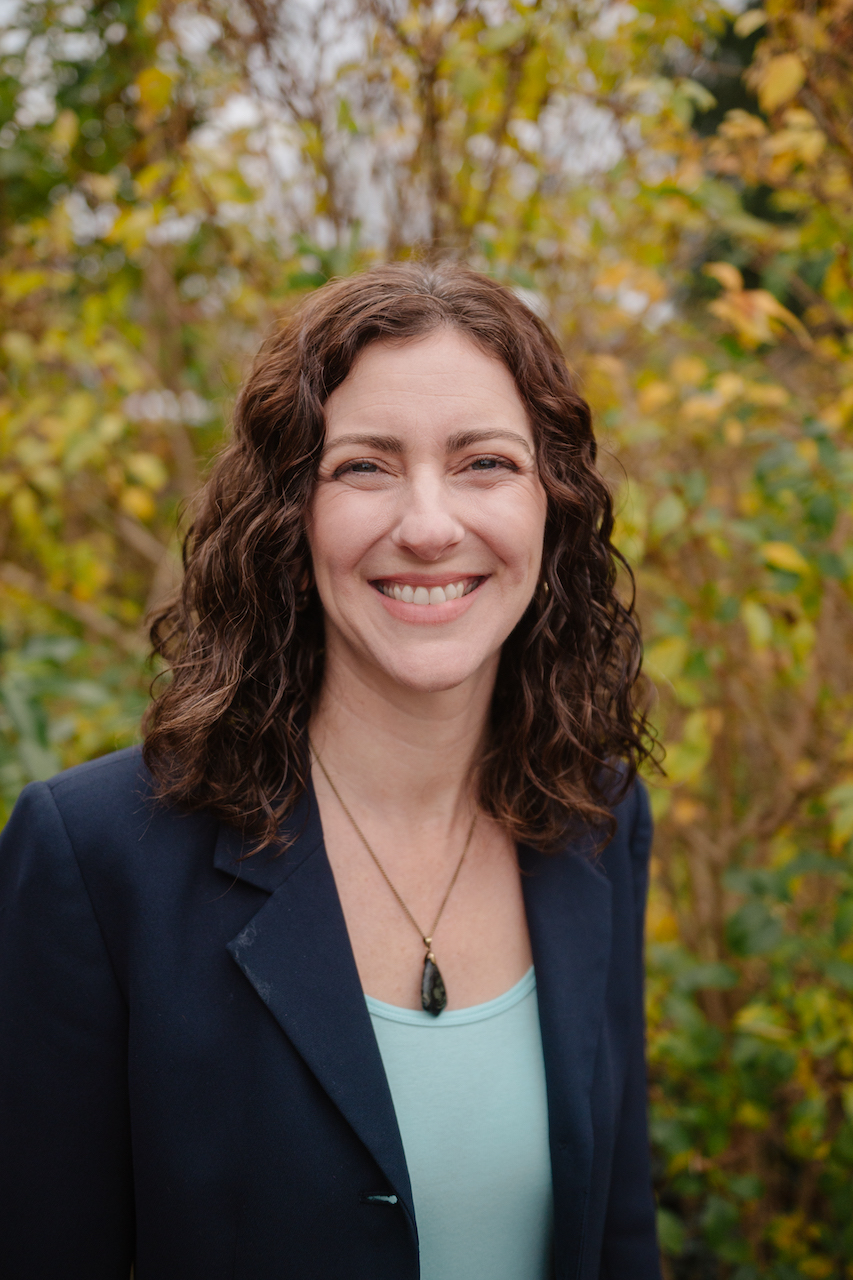
Chiropractor/Acupuncturist/Functional Medicine doc
Dr. Julie has been a practicing chiropractor and acupuncturist for over 15 years. Over the last 2 years she has incorporated functional medicine into her practice. She works with a lot of women during that transitional phase of life known as peri-menopause and women going through menopause and post menopause. Dr. Julie loves to stay active by doing kickboxing, walking and traveling.