

Gaslighting and Brain Health: Recognizing Manipulation and Protecting Your Mind with Dr. Jennifer Fraser, Ph.D.
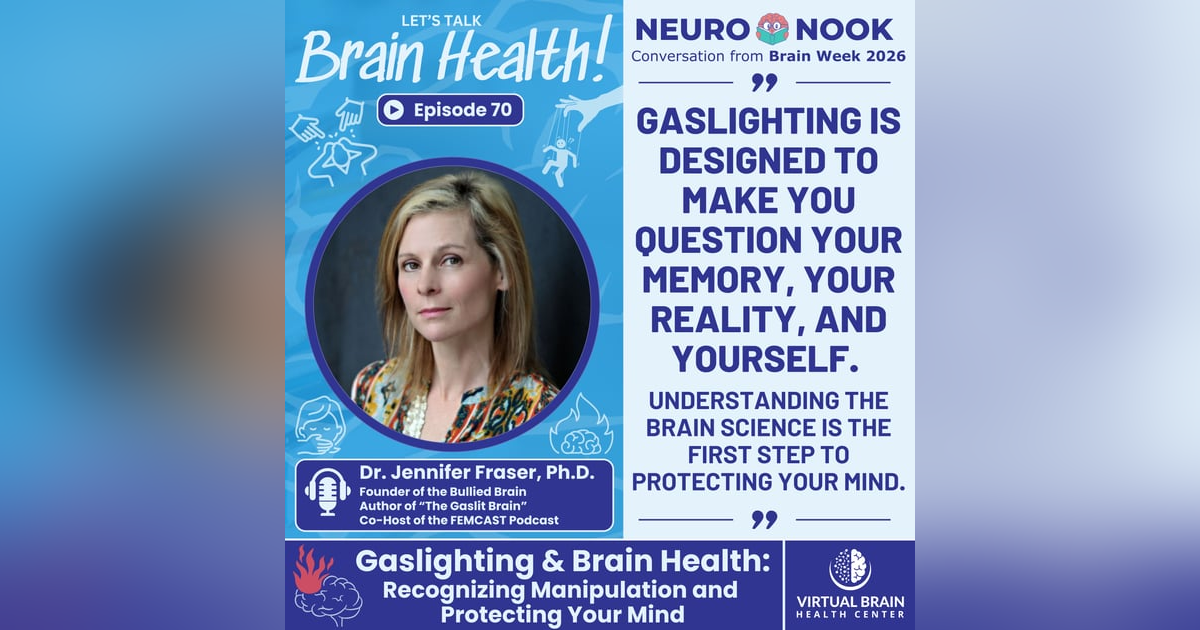


Gaslighting does not only affect your emotions. It affects your brain.
In this episode, Dr. Krystal Culler and Heather Elwell sit down with Dr. Jennifer Fraser, author of The Gaslit Brain, to examine what happens in the brain when someone experiences chronic gaslighting, bullying, and psychological harm.
*Please note that this conversation was recorded live during a live Neuro Nook book club discussion and featured as part of the Virtual Brain Health Center’s annual Brain Week series.*
This conversation connects neuroscience, workplace culture, and lived experience. You will learn how gaslighting disrupts memory, increases stress responses, and impacts cognitive performance. More importantly, you will learn what you can do to protect your brain.
This discussion also explores institutional gaslighting, why even high-performing professionals are vulnerable, and how understanding the science can reduce self-blame and increase clarity.
If you have ever questioned your memory, your judgment, or your sense of reality after a difficult workplace or personal experience, this episode provides language, science, and practical strategies.
What You Will Learn in This Episode
- The difference between normal conflict and gaslighting
- Why gaslighting is designed to create confusion
- What chronic psychological stress does to the brain
- How the amygdala and hippocampus respond to prolonged stress
- Why highly capable professionals are often targets
- How workplace cultures can enable manipulation
- Why language matters in recognizing psychological harm
- Brain-based strategies to strengthen cognitive resilience
Key Takeaways
- Gaslighting follows patterns. Learning those patterns helps you see clearly.
- Your brain is wired for trust. That makes manipulation difficult to recognize.
- Psychological harm can produce real neurological effects including: stress overload, memory disruption, and cognitive fatigue.
- Recovery is possible. Neuroplasticity means the brain can repair and adapt.
- Awareness is protection. Naming the behavior reduces its power.
Practical Brain Health Strategies Discussed
- Strengthen awareness of your environment and patterns of behavior
- Build a more precise emotional vocabulary to better interpret stress signals
- Prioritize psychological safety and supportive relationships
- Slow down decisions when something feels off
- Question assumptions and look for evidence before accepting claims
- Stay socially connected during recovery rather than withdrawing
Learn More About Dr. Jennifer Fraser
Website: BulliedBrain.com
Psychology Today column: The Bullied Brain
Podcast: The FEMCAST
Listen to host, Dr. Krystal Culler’s conversation with Dr. Jennifer Fraser on her podcast, The FEMCAST titled, “How 'Psychopath Puppet Masters' Destroy Careers (and How to Escape)” on iTunes, Spotify, or Substack or watch on YouTube
Related Resources Mentioned
Learn more about BrainHQ brain training platform from our previous podcast conversation with their lead scientist Dr. Henry Mahncke, Ph.D. “What the Latest Brain Training Science Means For Your Brain Health”
Previous podcast conversations with Dr. Jennifer Fraser
Listen now: Exposing Gaslighting: What it Does to the Brain and How to Heal
Listen now: Understanding the Neuroscience of Bullying & Its Impact on the Brain
Explore the written summary of Neuro Nook Book Club discussion on the gaslit brain
Key Message From This Episode
Gaslighting loses power when it is recognized and named. Protecting your brain starts with understanding how manipulation works and trusting your ability to question what does not feel right.
Support the Podcast
If this episode helped you better understand brain health and psychological safety:
- Share this episode with someone who may benefit
- Leave a review to help others find the show
- Subscribe for future brain health conversations
Contact
Have a topic you would like explored on the podcast?
Email: podcast@virtualbrainhealthcenter.com